
How Many Catalytic Converters Are in a Toyota Tundra?
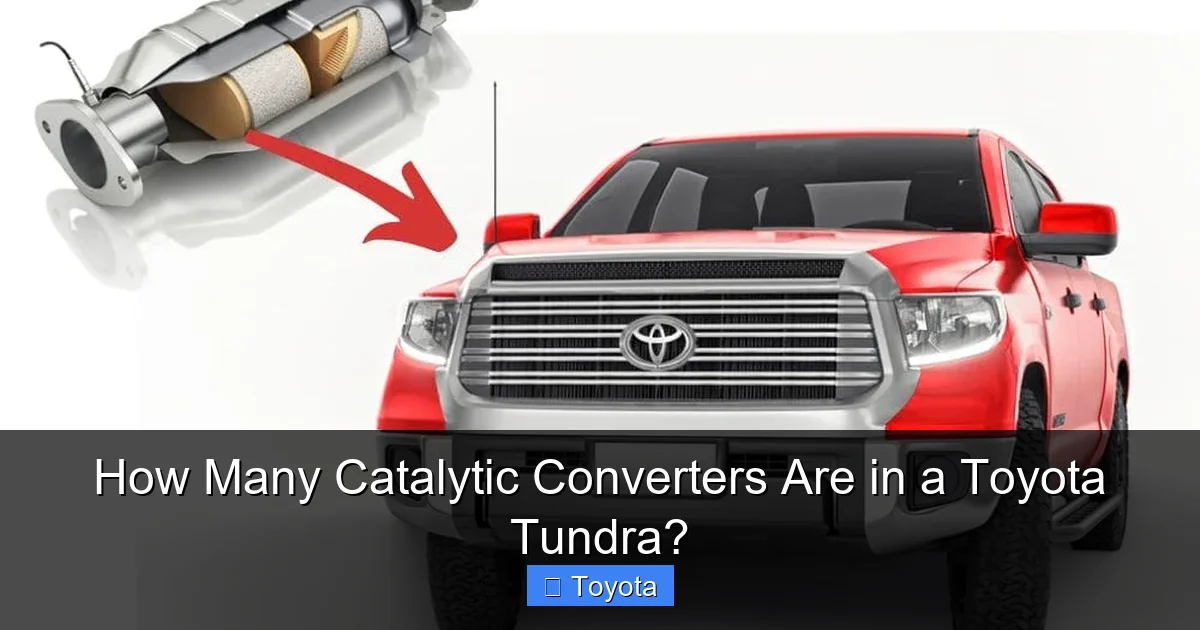
In this article, we explain exactly how many catalytic converters are installed in a Toyota Tundra, covering location details, typical lifespan factors, and replacement considerations. We break down the single catalytic converter found in the exhaust system and discuss how vehicle age, driving habits, and environmental conditions impact its durability. Understanding your Tundra’s emission component helps you maintain performance and comply with emissions regulations.
Imagine you’re standing in the middle of Montana, ready to tackle a rugged trail. Your Toyota Tundra roars to life, pulling you toward adventure through mountains and river valleys. Underneath that powerful engine lies a silent hero working tirelessly – the catalytic converter. But have you ever wondered how many of these clever devices protect your vehicle? Or perhaps you’ve heard strange noises coming from your exhaust and wonder if it’s time for a swap. This article demystifies everything about your Tundra’s catalytic converter system, giving you clear answers, practical advice, and peace of mind.
Key Takeaways
- One catalytic converter is standard in a Toyota Tundra, located downstream of the turbocharger and upstream of the muffler.
- The converter typically has a titanium substrate designed to withstand automotive temperatures while filtering harmful exhaust gases.
- Replacement is recommended every 30,000–50,000 miles or when emission tests fail, regardless of visible damage.
- Switching fuel types can render an existing converter unusable, requiring a new one during refueling.
- Improper warm-up periods and aggressive driving increase wear and tear on the converter.
- Proactive monitoring with OBD-II scanners helps catch conversion issues before they become costly repairs.
📑 Table of Contents
Understanding the Tundra’s Exhaust System
Your Tundra’s core engine architecture relies heavily on efficient exhaust management. The Toyota Tundra comes equipped with sophisticated V6 engines that demand precise control over emitted pollutants. Unlike simpler two-cylinder setups, modern trucks require advanced emission technologies to meet strict environmental standards. The heart of this system is the catalytic converter, a component that transforms toxic gases into harmless compounds. Understanding where and how this device operates will help you appreciate its role in maintaining both your vehicle’s health and compliance with legal requirements.
Location and Design of the Converter
In a Toyota Tundra, the catalytic converter occupies a specific position in the exhaust pathway. Typically, the unit sits immediately after the turbocharger (or supercharger depending on the generation) and before the sound deadening panel that leads to the muffler. This placement allows the converter to process exhaust gases while still benefiting from the turbo’s pressurized flow. The design features a honeycomb structure lined with precious metal oxides that chemically react with carbon monoxide, nitrogen oxides, and unburned hydrocarbons. Modern Tundras often employ three-way catalysts, which handle all three harmful compound categories simultaneously.
This central converter serves as the final barrier before exhaust reaches your vehicle’s tailpipe. Its job isn’t simply filtration – it’s activation. By providing optimal oxygen levels through the catalytic converter’s design, it enables complete combustion of fuel, reducing the amount of pollutants entering the atmosphere. Without this critical component, even the best-performing engine would fall foul of emissions testing regulations.
How Many Catalytic Converters Does Your Tundra Have?
When people ask about multiple catalytic converters in a Toyota Tundra, the answer is straightforward: there is normally just one. This contrasts sharply with some older vehicle platforms that used separate converters for different cylinders or exhaust ports. The Tundra’s single-converter architecture stems from its evolution as a production truck rather than a specialty performance machine. Manufacturers chose this approach for several reasons.
First, space constraints in the engine bay favor a consolidated exhaust system. Instead of managing multiple converter locations, engineers optimized the entire after-turbine path into a unified processing unit. Second, the Tundra benefits from technological advances that allow a single catalyst to handle increasingly stringent emission standards. Third, maintenance simplicity aligns with the brand’s philosophy of reliability – fewer parts mean easier servicing and lower long-term ownership costs.
It’s important to note that while most Tundras share this configuration, rare exceptions exist. Some heavily modified or special-ordered variants might incorporate additional components, such as secondary treatment units for heavy-duty applications. However, in standard configurations, your Tundra contains precisely one catalytic converter.
Where Exactly Is the Catalyst Installed?
Getting lost inside your Tundra can be intimidating, especially if you’re not familiar with automotive diagnostics. The catalytic converter’s physical location becomes clearer once you understand the sequential order of the exhaust system elements. Starting from the engine block, the flow moves through the exhaust manifold, then passes through the turbocharger (or supercharger in some generations), followed by the intercooler if present, and finally arrives at the catalytic converter itself.
From a visual standpoint, the converter appears as a cylindrical housing, roughly six inches in diameter and twelve inches tall at its widest point. It produces modest vibration compared to larger motors, yet represents significant engineering effort. The outer shell houses ceramic pellets coated with precious metals – primarily platinum, palladium, and rhodium – each chosen for its ability to facilitate specific chemical reactions. Inside, thousands of tiny catalyst particles work tirelessly to transform poisonous combustion byproducts.
Accessing this component requires basic mechanical skills. Most owners perform routine checks while the engine is cold, allowing safe removal without damaging surrounding components. Professional technicians typically remove the converter as part of exhaust system overhauls, replacing seals and gaskets along the way. For DIY enthusiasts, patience and proper tools are essential to avoid contaminating the delicate catalyst surface with oil or debris.
Tip: Always disconnect the battery before handling the catalytic converter, as the electrical connections can create unwanted sparks if disturbed improperly.
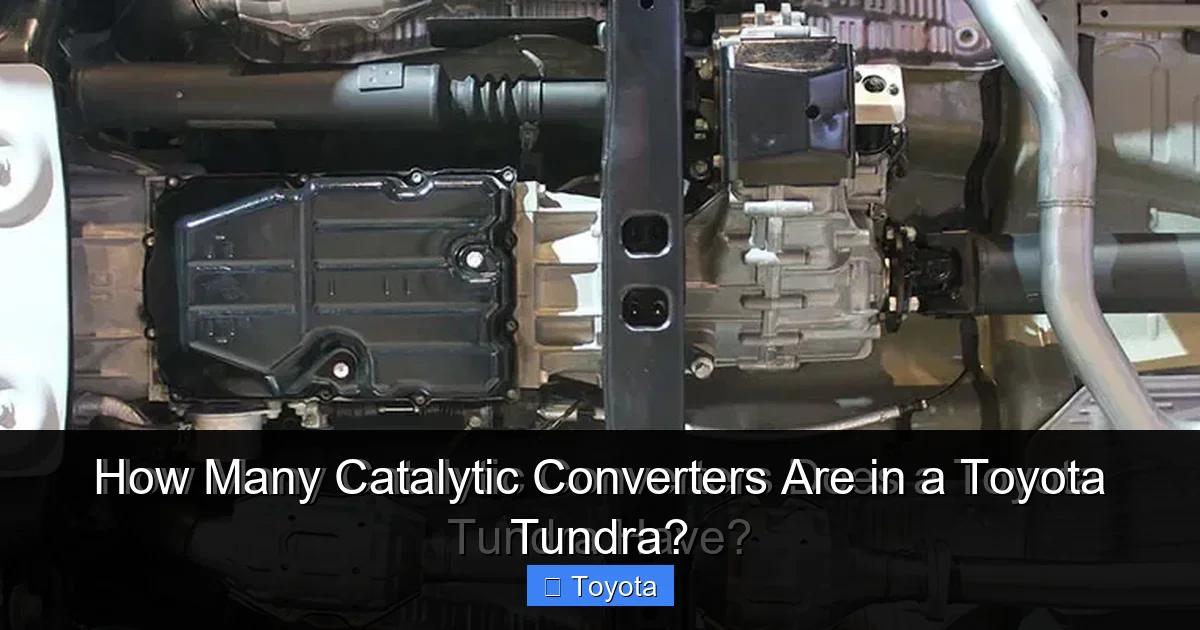
Visual guide about How Many Catalytic Converters Are in a Toyota Tundra?
Image source: aautomotives.com
What Affects Catalyst Lifespan in a Tundra?
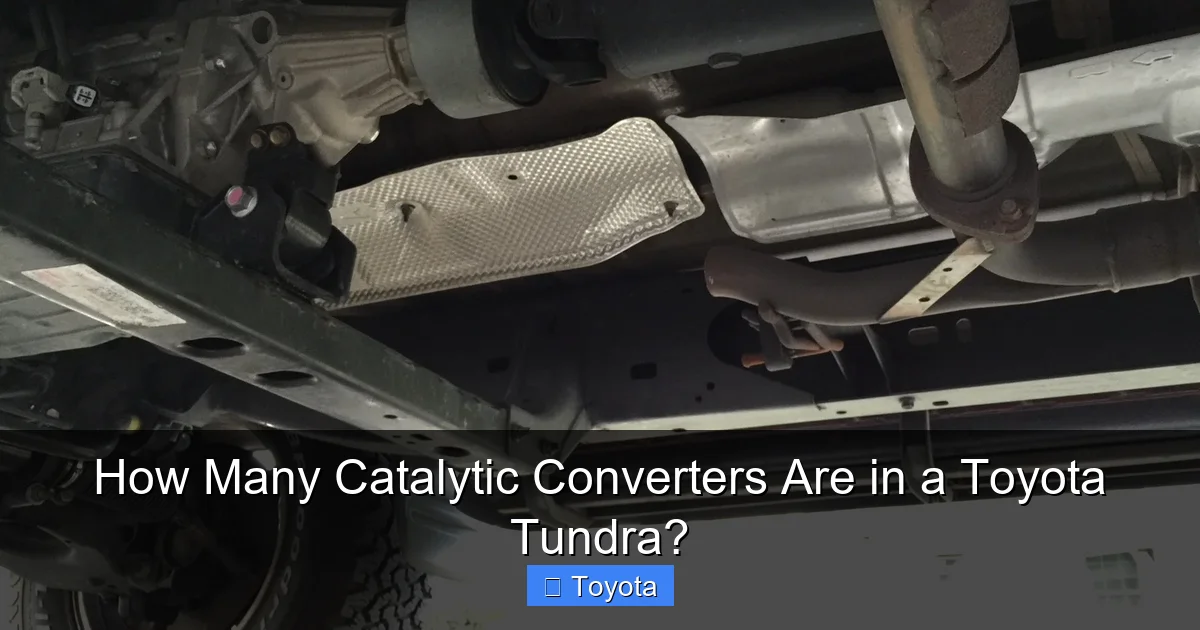
Visual guide about How Many Catalytic Converters Are in a Toyota Tundra?
Image source: auto-domain.com
While your Tundra starts with a fresh, fully functional converter, its service life depends on various external factors. Fuel quality represents one unexpected variable – lower-grade octane blends containing more aromatics can accelerate catalyst degradation. Similarly, gasoline additives and ethanol percentages influence pollution-forming compounds entering the exhaust stream. If your local station switches fuel formulations, your converter may experience premature aging despite proper maintenance.
Driving habits play an equally important role. Short trip commutes keep exhaust systems running cooler, which prevents thermal cycling stress on the catalyst. Conversely, prolonged idling and stop-and-go traffic subject the unit to repeated temperature fluctuations that strain materials. Cold starts force the engine to operate inefficiently until the catalytic converter heats up sufficiently, creating thermal shock that compounds over time. Frequent full-throttle acceleration generates excessive heat, potentially overwhelming conversion efficiency during brief bursts.
Environmental conditions beyond your control also matter. Acidic rain, road salt accumulation, and extreme humidity can corrode supporting components and interfere with the converter’s operation. Modern Tundras mitigate some of these concerns through corrosion-resistant construction and enhanced drainage designs. Nevertheless, vigilant owner awareness remains crucial for maximizing converter performance throughout your vehicle’s lifecycle.
Signs That Your Tundra Needs a New Converter
Detecting conversion problems early saves money and preserves vehicle performance. The first indicator is a persistent check engine warning light accompanied by specific trouble codes. Modern diagnostic tools reveal whether oxygen sensor failures, misfire detection, or excessive hydrocarbon levels are causing conversion inefficiency. Beyond electronic signals, listen for unusual sounds from the exhaust tract. A rattling or ticking noise often suggests loose clamps or cracked support brackets within the converter housing.
Reduced engine power represents another red flag. As the converter degrades, it struggles to manage emissions effectively, leading to decreased throttle response and slower acceleration. Additionally, noticeably stronger exhaust smells or black smoke from the tailpipe signal underlying issues. While occasional smokiness may occur during cold starts, sustained abnormal odors warrant investigation. Finally, observe check engine light interval patterns – frequent resets suggest recurring underlying problems that could ultimately damage other vehicle systems.
Catalytic Converter Care Alongside Other Maintenance Tasks
Think of your catalytic converter as the final link in a chain of vehicle care. Just as you’d regularly top off oil and replace air filters, keeping this emission control device healthy requires attention. Regular inspection of your turbocharger’s wastegate function ensures proper flow through the converter. Clean intake air filters prevent dirty entry streams that overwhelm the exhaust system. Oxygen sensors near the converter must remain sensitive for accurate conversion chemistry calculations.
Don’t overlook the importance of coolant temperature regulation. Overheated exhaust systems shift equilibrium conditions that affect catalyst performance. Proper cooling system maintenance indirectly protects your converter investment. Following Toyota’s recommended service intervals – particularly those involving fluid changes in the transmission, as outlined in guides like how often to change transmission fluid in a Toyota Highlander – maintains overall engine balance. This holistic approach extends the life of your catalytic converter well beyond the standard mileage recommendations.
When considering purchases, particularly for pre-owned Tundras, research provenance thoroughly. Certified pre-owned programs like those featured by Don Moore Toyota Used Cars Inventory offer verified history and extensive service records. This transparency is invaluable when evaluating converted or heavily driven units where conversion history might have been compromised.
Conclusion
To summarize, a standard Toyota Tundra contains a single catalytic converter positioned strategically after the turbocharger and before the muffler. This essential component works silently behind the scenes to protect both your environment and your vehicle’s compliance with emissions laws. With proper care, attention to maintenance schedules, and mindful driving practices, this converter can serve reliably for tens of thousands of miles. Remember that replacement is far more cost-effective if anticipated rather than delayed, especially given the complexity involved in disposal and recycling processes. Your Tundra deserves the continued performance and longevity that come from respecting every part of its sophisticated emission control system. Stay informed, stay proactive, and enjoy the freedom that your beautifully engineered truck provides.
Frequently Asked Questions
Question?
How long does a catalytic converter typically last in a Toyota Tundra?
A standard catalytic converter in a Toyota Tundra will generally last anywhere from 60,000 to 100,000 miles under normal driving conditions. However, factors like driving style, fuel quality, and environmental exposure can significantly reduce this lifespan. Early replacement around the 40,000-mile mark is advisable if symptoms appear.
Question?
Can you drive safely with a bad catalytic converter?
Yes, you can continue driving with a malfunctioning converter, but the vehicle will likely exhibit warning signs such as strong exhaust odors, decreased acceleration, and potential check engine light illumination. Prolonged operation with a faulty converter increases the risk of further exhaust system damage and higher repair costs later.
Question?
Does using premium gasoline affect the lifetime of the catalytic converter?
Premium fuel doesn’t inherently improve the converter’s longevity, but lower-octane fuels with higher aromatic content can produce more pollutants that stress the catalyst. Using ethanol-blended fuel in regions where it exceeds regional limits may accelerate conversion efficiency loss, making timely replacement more necessary.
Question?
What happens if I don’t replace a failed catalytic converter?
Failure to address a bad converter eventually results in severe engine misfires, poor fuel economy, and potential complete engine shutdown. Since the converter is impossible to repair once clogged, replacement becomes mandatory rather than optional. Ignoring this issue until catastrophic failure forces unnecessary expenses.
Question?
Are catalytic converters expensive to replace in a Toyota Tundra?
Replacement costs vary by market but typically range from $600 to $2,500 depending on labor and parts availability. Given the convenience and safety advantages over alternative solutions, investing in a new converter now is often cheaper than dealing with ongoing conversion-related diagnostic and repair attempts.
Question?
Is my Tundra likely to need a second catalytic converter upgrade?
Yes, particularly if previous conversions were performed under non-standard conditions or if your vehicle experienced significant accident damage. Multi-stage upgrades exist for performance-oriented applications, but standard owners rarely encounter this scenario. Most Tundras see at most one major converter installation throughout their life.


