
Toyota Camry Won’t Start but Has Power
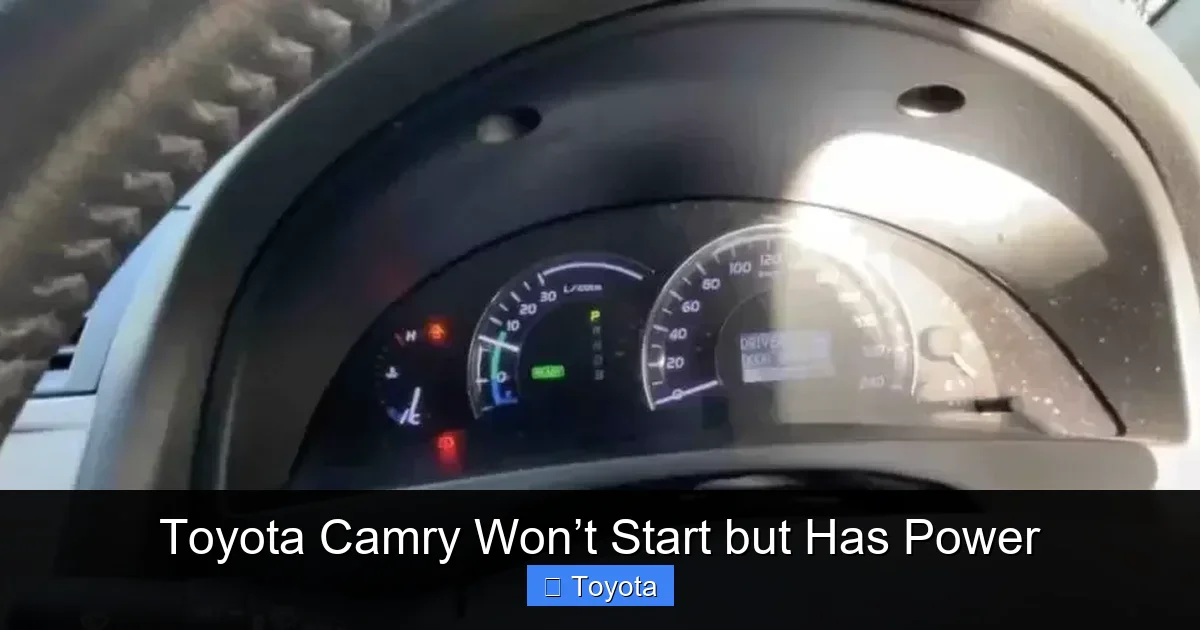
If your Toyota Camry won’t start but has power, the problem is usually a simple electrical or fuel issue. Follow these easy steps to diagnose and fix the no‑start condition quickly.
Key Takeaways
- Check the battery terminals for corrosion or loose connections. A weak or intermittent connection can prevent starting while still allowing lights to work.
- Listen for the starter motor click; no click often means a bad starter or solenoid. This helps differentiate between power and mechanical failure.
- Verify fuel delivery by checking the fuel pump sound and fuel pressure. A silent pump or low pressure indicates a fuel system fault.
- Inspect the ignition system, including spark plugs and ignition coils. Worn plugs or a failed coil can stop the engine from firing.
- Scan for error codes using an OBD‑II reader to pinpoint sensor or computer issues. Codes like P0300 or P0171 give crucial clues.
- Consider the timing chain or camshaft sensor if the engine cranks but never fires. These components can cause a no‑start despite power.
📑 Table of Contents
Introduction
It’s a frustrating moment when you turn the key and hear the lights come on, but the engine stays silent. Your Toyota Camry has power, yet it won’t start. This situation happens more often than you might think, and most of the time the cause is something you can check yourself.
In this guide we’ll walk through the most common reasons a Camry won’t start while still receiving electricity. You’ll learn simple tests, practical tips, and when it’s best to call a professional. Let’s get your car back on the road.
Common Electrical Issues
Battery and Connections
Even if the interior lights work, the battery may not be delivering enough cranking power. Inspect the terminals for corrosion or loose bolts. Clean any white buildup with a wire brush and tighten the connections. If the battery is older than three years, consider a load test or a replacement.
For more details on battery requirements, see What Size Battery Does A 2012 Toyota Camry Need.
Starter Motor and Solenoid
A faint click or no sound at all points to the starter or its solenoid. When you turn the key, listen carefully. A single click usually means the solenoid is engaging but the starter motor isn’t turning. In that case, the starter may need a tap, a rebuild, or a new unit.
If you’re curious about starting a Camry manually, check out How To Start A Toyota Camry With A Manual Key for an alternative method.
Ignition Switch and Relay
The ignition switch sends power to the starter circuit. If the switch is worn, you may get power to the dashboard but nothing to the starter. A faulty relay can also block the signal. Swapping the relay with a known good one is a quick test.
Fuel System Problems
Fuel Pump Operation
When you turn the key to the “on” position, you should hear a brief whirring sound from the fuel pump. No sound often means the pump is dead or its fuse is blown. Check the fuel pump fuse in the engine bay and listen for the pump priming.
Fuel Filter and Lines
A clogged fuel filter restricts flow, causing a no‑start condition. If the filter hasn’t been changed in the last 30,000 miles, replace it. Also inspect the fuel lines for cracks or leaks that could starve the engine.
Fuel Pressure Regulator
Even with a working pump, incorrect pressure can prevent ignition. Use a fuel pressure gauge to verify that the pressure matches the specification in your owner’s manual. Low pressure usually points to a bad regulator.
Ignition and Engine Firing
Spark Plug Condition
Worn or fouled spark plugs can stop the engine from firing. Remove each plug and examine the electrode. If it’s covered in carbon or looks eroded, replace the plugs. Using the correct heat range is essential for reliable ignition.
Ignition Coil Health
The ignition coil transforms battery voltage into the high spark needed for combustion. A failing coil may cause a weak spark or no spark at all. Test the coil’s resistance with a multimeter or swap it with a known good coil to see if the engine starts.
Crankshaft Position Sensor
Modern Camrys rely on the crankshaft position sensor to tell the computer when the pistons are moving. If this sensor fails, the computer won’t fire the injectors or spark, even though the engine cranks. A diagnostic scan can confirm a bad sensor.
Computer and Sensor Faults
Check Engine Light and OBD‑II Codes
If the check engine light is on, plug in an OBD‑II scanner. Read the stored codes; they can point directly to a sensor failure, such as the camshaft or crankshaft position sensor, or a fuel trim issue. Clearing the codes after repair helps verify the fix.
Learn more about camry check engine light causes in Why Is My Toyota Camry Check Engine Light On.
Camshaft Position Sensor
A faulty camshaft sensor can prevent the engine control module from timing fuel injection correctly. Symptoms include a cranking engine that never starts, especially after the engine warms up. Replace the sensor if testing shows no signal.
Crankshaft Position Sensor
Similar to the camshaft sensor, a bad crankshaft sensor stops the computer from knowing engine speed. This can cause a no‑start despite power. Check for intermittent connections and test resistance according to service manual specs.
Diagnostic Steps and Tools
Using a Multimeter
A multimeter is essential for checking voltage at the battery, starter, and ignition coil. Set it to DC volts and probe the appropriate terminals while cranking. You should see at least 10 volts at the starter; lower readings indicate a weak battery or poor connections.
Listening for Starter Click
Sometimes the click is faint. Use a mechanic’s stethoscope or a long screwdriver to amplify the sound near the starter. No click means the starter circuit isn’t completing, while a rapid clicking may indicate a weak battery.
Performing a Fuel Pressure Test
Connect a fuel pressure gauge to the test port on the fuel rail. Turn the key to the “on” position (engine off). The pressure should rise quickly to the spec listed in your manual, typically around 40‑55 psi for a Camry. Low or no pressure points to pump, filter, or regulator issues.
When to Seek Professional Help
Complex Repairs
If you’ve checked the battery, starter, fuel pump, and ignition components without success, the problem may be deeper. Issues like a faulty engine control module or internal engine damage require specialized tools and expertise.
Cost Considerations
Professional diagnosis can range from $100 to $200, depending on the shop. While it may seem pricey, it can save you time and prevent unnecessary part replacements. Weigh the cost against your comfort level with DIY repairs.
Conclusion
Dealing with a Toyota Camry that won’t start but has power can be intimidating, but most causes are straightforward. Start with the battery and connections, then move to the starter, fuel system, ignition components, and finally the computer sensors. Use the diagnostic steps outlined above, and don’t hesitate to consult a professional if the issue remains hidden. With a systematic approach, you’ll likely get your Camry running again without a costly shop visit.
Frequently Asked Questions
What is Toyota Camry Won’t Start but Has Power?
Toyota Camry Won’t Start but Has Power is an important topic with many practical applications.


