Does a Lift Kit Void Toyota Warranty?
Installing a lift kit on your Toyota can affect warranty coverage, but it doesn’t automatically void it. The key is whether the modification causes a failure that would have been covered otherwise. Understanding the policy helps you protect your vehicle and avoid surprises.
When you love your Toyota truck, it’s hard not to imagine it sitting a little higher, ready for off‑road adventures. Many owners ask the same question: does a lift kit void Toyota warranty? The answer isn’t a simple yes or no, and it depends on how the warranty is written and how the lift is installed. In this guide we’ll break down what Toyota’s warranty actually covers, how a lift kit is viewed as a modification, and what steps you can take to keep your coverage intact. By the end you’ll know exactly what to expect when you walk into a service department with a lifted vehicle.
Understanding the warranty is the first step toward making an informed decision. Toyota offers several layers of protection, including a basic warranty, a powertrain warranty, and sometimes additional coverage for specific components. Each layer has its own set of rules, and knowing which parts are covered can help you avoid surprises when a repair is needed. In the following sections we’ll explore the details of these coverages and how they interact with aftermarket modifications like lift kits.
Key Takeaways
- Point 1: A lift kit is considered a modification that can impact warranty coverage.
- Point 2: Toyota’s warranty covers defects, not wear caused by aftermarket changes.
- Point 3: If a lifted part fails because of the lift, the warranty may be denied.
- Point 4: Some dealers may still cover unrelated issues even after a lift.
- Point 5: Keep receipts and use quality parts to reduce the risk of a claim.
- Point 6: Check your specific warranty terms and consider extended coverage.
📑 Table of Contents
Understanding Toyota’s Warranty
What the warranty covers
Toyota’s standard warranty, often called the Basic Warranty, typically covers defects in materials and workmanship for a set period, such as three years or 36,000 miles. This means if a part fails because of a manufacturing error, Toyota will repair or replace it at no cost to you. The warranty also includes a powertrain warranty that covers the engine, transmission, and drivetrain components for longer, often up to five years or 60,000 miles. In addition, Toyota offers a roadside assistance program and, for some models, a warranty on the battery and hybrid system. These coverages are designed to protect owners from unexpected repair costs during the early life of the vehicle.
The warranty is transferable to subsequent owners, which can be a selling point if you decide to trade in or sell your truck. However, the transfer process requires documentation and may involve a fee, so keep your original paperwork in a safe place. Understanding how the warranty works can also help you plan for major repairs, such as replacing a turbocharger or a hybrid battery, which are often covered under the powertrain warranty.
Exclusions and limitations
However, the warranty comes with exclusions. It does not cover damage caused by accidents, misuse, or modifications that affect the vehicle’s original design. Normal wear and tear, such as tire rotation or brake pad replacement, is also excluded. Importantly, any alteration that changes the vehicle’s geometry, weight distribution, or electronic systems can be considered a modification that may void coverage for related components. For example, a cracked windshield is usually covered unless it is a result of a modification. Additionally, damage from improper maintenance or the use of non‑approved parts can lead to a denied claim, so it’s essential to follow Toyota’s recommended service schedule.
Lift Kits as Modifications
Definition of a lift kit
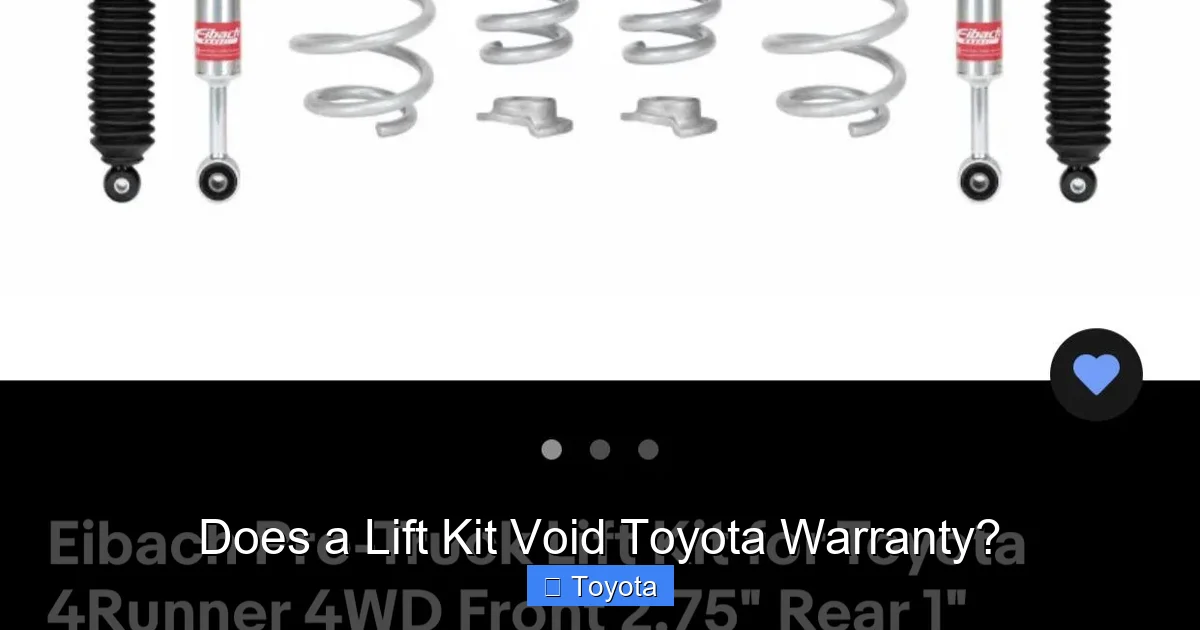
A lift kit is a set of aftermarket parts that raise the ride height of a vehicle. It can include new springs, spacers, longer shocks, and sometimes control arms. The goal is to improve ground clearance, allow larger tires, and enhance off‑road capability. There are several types of lift kits, such as body lifts, suspension lifts, and leveling kits, each with different effects on the vehicle’s handling. Some kits are bolt‑on and require minimal welding, while others involve more extensive fabrication. Choosing the right type depends on your driving habits, the terrain you plan to tackle, and how much you value comfort versus aggressive styling.
When selecting a lift kit, consider the intended use of your vehicle. If you frequently drive on paved roads, a modest leveling kit may be sufficient, whereas an off‑road enthusiast might prefer a full suspension lift with heavy‑duty components. It’s also important to verify that the kit is compatible with your vehicle’s factory electronics, such as the ABS and stability control systems, to prevent error codes from appearing.
How it affects vehicle dynamics
Raising the center of gravity changes how the truck handles in turns and during emergency maneuvers. It also alters the angles of the drive shafts and CV joints, which can increase wear on those components. Additionally, the stock suspension geometry is modified, which may affect the accuracy of the vehicle’s electronic stability control and anti‑lock braking system. The change in ride height can also influence the calibration of the tire pressure monitoring system and the vehicle’s overall aerodynamics. These effects can lead to increased tire wear, reduced fuel efficiency, and a need for more frequent alignment checks.
Moreover, a lifted vehicle may experience changes in braking distance and traction control response. The increased height can also cause the vehicle to sit higher in the wheel wells, potentially affecting the operation of the door sensors or the rearview camera. Drivers should take time to re‑learn the vehicle’s handling characteristics, especially when towing or carrying heavy loads.
Does a Lift Kit Void the Warranty?
The general rule
In most cases, installing a lift kit does not automatically void the entire Toyota warranty. The warranty remains valid for parts that are unrelated to the modification. For example, if your engine fails due to a manufacturing defect, that repair would still be covered even if you have a lift kit installed. The key is that the failure must be unrelated to the lift itself. However, if the lift causes a component to fail that would otherwise be covered, the dealer may deny the claim, arguing that the modification contributed to the damage.
Exceptions and dealer discretion
However, if a component that is directly affected by the lift fails—such as a CV joint, wheel bearing, or suspension part—the dealer may argue that the failure was caused by the modification. In such situations, the warranty claim could be denied. Some dealers are more lenient, while others strictly enforce the policy. It’s wise to discuss your plans with the service manager before installation and to ask for written confirmation of what remains covered. Building a good relationship with your service advisor can also help you navigate any potential disputes.
Protecting Your Warranty After Lifting
Choose the right kit
One of the best ways to preserve warranty coverage is to select a high‑quality lift kit that is designed for your specific model. For instance, the best lift kit for Toyota 4Runner 4th gen offers components that match the factory specifications as closely as possible, reducing the risk of unrelated failures. Look for kits that are engineered to maintain the original suspension geometry and use OE‑grade materials. Avoid cheap, generic parts that may compromise safety and lead to premature wear.
When comparing kits, pay attention to the included hardware, such as bolts and bushings, and verify that they meet the manufacturer’s torque specifications. A kit that includes detailed installation instructions and technical support can be invaluable, especially for first‑time installers. Additionally, consider the warranty offered by the kit manufacturer, as it can provide an extra layer of protection if defects arise.
Professional installation
Having the kit installed by a certified technician ensures that all parts are fitted correctly and that any necessary adjustments are made to the vehicle’s systems. Proper installation can prevent premature wear on drivetrain components and keep the vehicle’s electronics functioning as intended. A professional can also re‑align the vehicle and check for any interference with the ABS or stability control sensors. If you attempt a DIY installation, be prepared to address any unexpected issues that may arise, such as misaligned sensors or rubbing components.
Many shops offer a warranty on their workmanship, which can be beneficial if a problem occurs shortly after installation. Before choosing a shop, ask about their experience with lifted vehicles and whether they have certifications from the lift kit manufacturer. A reputable shop will also provide a detailed invoice that lists all parts and labor, which can be useful for warranty claims.
Documentation and maintenance
Keep a detailed record of the installation, including receipts and a list of parts. Regular maintenance, such as checking alignment and replacing worn bushings, demonstrates that you are taking care of the vehicle. If a warranty issue arises, this documentation can support your claim. Consider scheduling a post‑installation inspection with your dealer to verify that everything is within acceptable tolerances. Additionally, follow the manufacturer’s recommended service intervals for oil changes, tire rotations, and brake inspections to maintain optimal performance.
Creating a maintenance log that notes the date, mileage, and services performed can be particularly helpful when it’s time for a major repair. Some owners also take photographs of the undercarriage before and after the lift to document the condition of components. These records can be invaluable if you need to prove that a failure was not caused by the modification.
Insurance and safety
After lifting your vehicle, it’s important to inform your insurance provider. The change in ride height can affect the vehicle’s safety rating and may influence your premium. Additionally, some states have regulations on maximum ride height, so check local laws before modifying. If you plan to take your lifted 4Runner off‑road, learn how to put a Toyota 4Runner in 4 wheel drive to maximize traction and reduce the risk of damage. Proper off‑road technique can also prevent unnecessary strain on the suspension and drivetrain, helping to preserve warranty coverage.
Real‑World Examples
Case study 1
A 2020 Toyota Tacoma owner installed a 2‑inch suspension lift. After 15,000 miles, the front CV boots began to leak. The dealer inspected the vehicle and determined that the altered angle caused the failure, so the repair was not covered. However, the engine’s timing chain, which failed at 45,000 miles, was still replaced under the powertrain warranty. This illustrates that while some claims may be denied, others unrelated to the lift remain eligible for coverage. The owner learned the importance of monitoring wear items and keeping detailed service records.
In a similar case, another Tacoma owner experienced a transmission issue after installing a larger lift. The dealer initially denied the claim, but after reviewing the service history and confirming that the transmission fluid had been changed at the recommended intervals, the warranty was honored. This highlights the value of adhering to the manufacturer’s maintenance schedule and maintaining clear documentation.
Case study 2
Another driver added a body lift to a 2018 Toyota 4Runner. The lift did not affect the braking system, but the ABS light came on due to a faulty wheel speed sensor. The dealer replaced the sensor under warranty because it was unrelated to the lift. This shows that each claim is evaluated individually, and the outcome depends on whether the failure can be linked to the modification. The driver also noted that maintaining good communication with the service department helped streamline the repair process.
A third example involves a 2016 Toyota Tundra that received a 4‑inch suspension lift. The owner reported increased vibrations at highway speeds, which were traced to an unbalanced driveshaft. The dealer replaced the driveshaft under warranty, citing a manufacturing defect, but advised the owner to have the alignment checked regularly. This case underscores the importance of addressing any new symptoms promptly to prevent further damage.
Conclusion
In summary, a lift kit does not automatically void your Toyota warranty, but it can affect coverage for components directly impacted by the modification. By choosing quality parts, using professional installation, and maintaining thorough records, you can protect your warranty and enjoy the benefits of a lifted truck. Always communicate with your dealer and review your warranty terms to stay informed about what is covered. Taking these steps will help you balance performance enhancements with peace of mind, ensuring that your Toyota remains reliable whether you’re navigating city streets or exploring rugged trails.
Frequently Asked Questions
Does a lift kit automatically void my Toyota warranty?
No, a lift kit does not automatically void the entire warranty. Coverage remains for parts unrelated to the modification, but failures caused by the lift may be denied.
Which components are most likely to be affected by a lift kit?
Components such as CV joints, wheel bearings, suspension parts, and drivetrain angles are most vulnerable, as the altered geometry can increase wear and stress.
Can I install a lift kit myself and still keep my warranty?
You can install it yourself, but improper installation may lead to denied claims. Professional installation is recommended to ensure correct fit and function.
What should I tell my dealer before installing a lift kit?
Inform the service manager about your plans and ask for written confirmation of which warranty coverage will remain intact after the modification.
Will my insurance premium increase after lifting my Toyota?
It may increase, as the change in ride height can affect the vehicle’s safety rating. Notify your insurer and review your policy for any adjustments.
How can I protect my warranty after installing a lift kit?
Choose a high‑quality kit, use a certified installer, keep detailed records, and follow the recommended maintenance schedule to demonstrate proper care.