What Does H4l Mean on a Toyota 4runner?
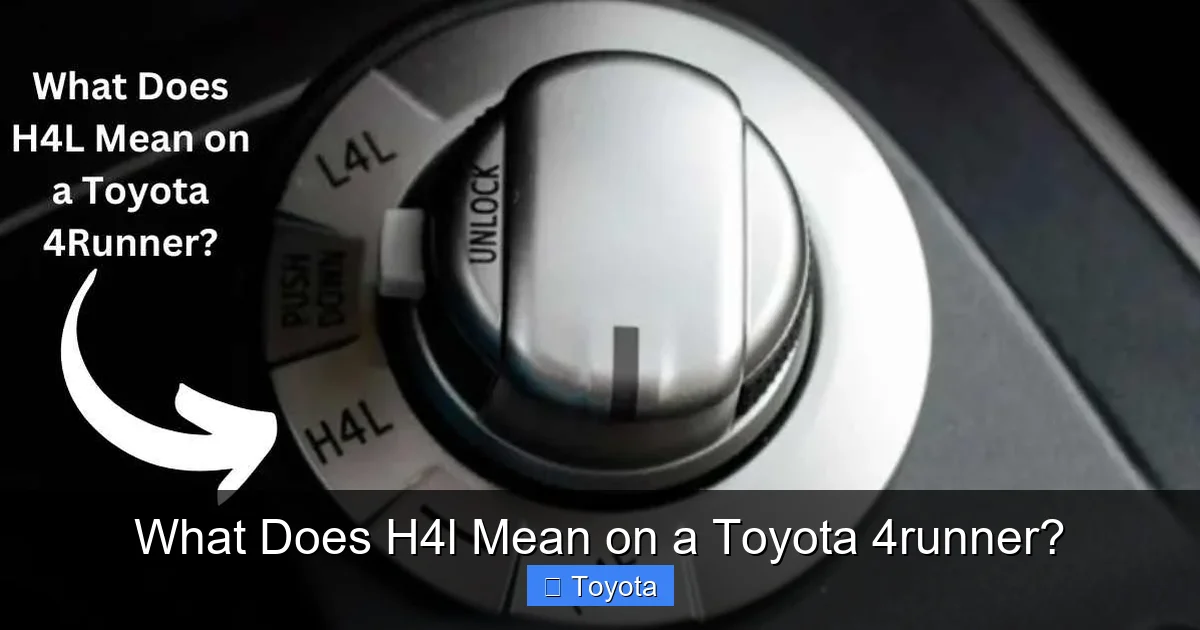
What does ‘H4L’ mean on a Toyota 4Runner? It’s a warning light that appears when the vehicle’s Hybrid 4L system detects a fault, often related to the 4‑wheel drive or engine management. Understanding the cause helps you fix it quickly and keep your 4Runner reliable.
Key Takeaways
- Point 1: The H4L warning stands for Hybrid 4L and signals a problem with the 4‑wheel drive or hybrid monitoring system.
- Point 2: Common triggers include low hybrid oil, faulty sensors, wiring issues, or software glitches.
- Point 3: Early diagnosis prevents costly repairs and keeps performance optimal.
- Point 4: Simple steps like checking fluid levels or resetting the system can clear the warning.
- Point 5: Regular maintenance and software updates reduce the chance of H4L alerts.
- Point 6: If the light persists, professional service is recommended to avoid damage.
📑 Table of Contents
Understanding H4L on a Toyota 4Runner
When you start the engine of your Toyota 4Runner and notice a small yellow icon that looks like an “H” with the numbers “4L” underneath, you might wonder what it means. The H4L warning is not a standard check‑engine light; it’s a dedicated alert from Toyota’s Hybrid 4L system. This system blends a hybrid electric assist with the traditional 4.0L V6 engine to improve fuel efficiency and provide smoother torque delivery. The H4L icon typically flashes or stays solid, depending on how severe the issue is. In simple terms, it tells you that something inside the Hybrid 4L setup is not operating as designed.
Why should you care? The Hybrid 4L system helps your 4Runner deliver better acceleration while using less fuel. If the system fails, you may lose some of that extra power, and in worst‑case scenarios, the 4‑wheel drive capability could be compromised. The good news is that most H4L issues are easy to diagnose and fix, especially if you catch them early. In the next sections we’ll walk you through what triggers the warning, how to run a quick diagnostic, and the steps you can take to get your 4Runner back to normal.
What Exactly Is the Hybrid 4L System?
The Hybrid 4L system is a proprietary blend of a gasoline‑powered 4.0L V6 engine and an electric motor‑generator. The “4L” refers to the engine’s displacement, while the “H” signals that a hybrid component is involved. This system works by using electric power to assist the gasoline engine during acceleration, which reduces fuel consumption and smooths out power delivery. It also helps the 4Runner’s 4‑wheel drive system engage more efficiently when needed.
Inside the system, you’ll find a high‑voltage battery pack, an inverter, motor‑generator units, and a series of sensors that monitor temperature, voltage, and torque. The H4L warning light is triggered when the vehicle’s computer detects a fault in any of these components. The fault could be as simple as a loose connector or as complex as a failing inverter. Understanding the basics helps you communicate the problem more clearly to a technician, which can save time and money.
Common Causes of the H4L Warning
The H4L light can appear for several reasons. The most frequent culprits are:
- Low hybrid battery fluid or voltage. The high‑voltage battery needs to stay within a specific range. If the voltage drops too low, the system will trigger H4L.
- Faulty sensors. The system relies on sensors that monitor temperature, current, and position. A bad sensor can send incorrect data, causing the warning.
- Broken or corroded wiring. The hybrid system uses high‑current cables. Corrosion or damage can interrupt communication between components.
- Software glitches. Toyota occasionally releases updates to fix bugs in the hybrid control module. An outdated software version can cause false warnings.
- Mechanical issues. In rare cases, the motor‑generator itself may fail, or the belt that drives the inverter may break.
It’s worth noting that the H4L warning often mimics other system alerts, such as the Check AWD System message you might see on a Toyota Highlander. Both warnings indicate that something inside the drivetrain is not functioning correctly, but the H4L is specific to the hybrid portion. If you see both lights together, it usually points to a deeper issue that needs professional attention.
How the Hybrid 4L System Works in Simple Terms
Think of the Hybrid 4L system as a team of two players: the gasoline engine and the electric motor. When you accelerate gently, the electric motor provides a boost, reducing the load on the gasoline engine. This boost also helps the 4‑wheel drive system engage more quickly when you need extra traction. The system continuously balances power between the two sources, and the vehicle’s computer constantly checks that everything stays within safe parameters. When something goes out of balance—like a drop in battery voltage or a sensor reading that is off—the computer lights up the H4L icon to let you know there’s a problem.
How to Diagnose H4L Issues
Before you rush to a dealer, you can run a few quick checks at home. These steps are straightforward and require only basic tools you probably already have.
Step 1: Check the Hybrid Battery Voltage
Open the hood and locate the high‑voltage battery pack (it’s usually on the driver’s side, near the front of the vehicle). Most 4Runners have a service plug that lets you read the battery’s voltage without touching the high‑voltage circuits. Use a multimeter set to 20V DC. A healthy battery should read between 200V and 260V. If the voltage is significantly lower, you may need to recharge the battery or have it inspected.
Step 2: Inspect for Loose Connectors
Look for any obvious signs of corrosion or looseness around the battery terminals, the inverter connector, and the motor‑generator wiring harnesses. A simple contact cleaner and a tight fastener can often clear the H4L warning. If you notice green corrosion, clean it with a wire brush and dielectric grease.
Step 3: Run a System Reset
Some H4L warnings are triggered by temporary glitches. You can try resetting the hybrid system by turning the engine off, waiting about 30 seconds, and then restarting. If the warning stays, you may need to perform a “mode reset” by holding the brake pedal and pressing the power button while the key is in the “ON” position. This mimics the process described in our guide on How to Turn Off VSC TRAC Light on a Toyota 4Runner. The same principle applies: a brief power cycle can clear minor software hiccups.
Step 4: Use an OBD‑II Scanner
For a more detailed diagnosis, an OBD‑II scanner can read hybrid‑specific codes that the standard engine‑code reader might miss. Plug the scanner into the diagnostic port under the driver’s side dash, turn the key to “ON,” and let it communicate with the vehicle’s computer. Look for any codes that start with “H4L” or related hybrid fault codes. Write down the code numbers, as they will be useful when you talk to a technician.
Step 5: Visual Inspection of the Motor‑Generator Belt
The motor‑generator belt drives the electric motor and can wear out over time. If the belt looks cracked, frayed, or overly loose, it may be causing the H4L warning. Replacing the belt is a job best left to a certified Toyota technician, but you can at least confirm its condition before you call for service.
Step‑by‑Step Fixes for H4L Problems
Depending on what you discover during the diagnostic phase, you may be able to fix the issue yourself. Below are the most common repairs, each broken down into simple actions.
Replacing the Hybrid Battery
If the voltage is consistently low and the battery is old (usually 8–10 years), you may need a replacement. Toyota sells a remanufactured battery that fits the 4Runner, and many independent shops can install it for a fraction of the dealer price. When you replace the battery, be sure to follow the manufacturer’s safety procedures, as the high‑voltage system can be dangerous if mishandled.
Cleaning or Replacing Faulty Sensors
Sensors are often the hidden culprits behind H4L warnings. You can purchase replacement sensors for the temperature and current monitors from auto parts stores. Removing the old sensor usually requires unscrewing a few bolts and disconnecting the wiring harness. After installing the new sensor, reset the system and see if the H4L light disappears.
Repairing Wiring Harnesses
Corroded or damaged wires can be repaired with heat‑shrink tubing and electrical tape, but it’s often safer to replace the entire harness. If you notice any melted insulation or broken strands, it’s best to replace that section. This job is more involved, so consider having a professional handle it unless you have experience with high‑voltage systems.
Updating Hybrid Control Module Software
Software updates are usually delivered via a dealer visit, but you can sometimes download the latest firmware from Toyota’s website. Follow the instructions carefully, as updating the hybrid control module requires a special diagnostic tool. After the update, perform a full system reset and check for any lingering H4L warnings.
Replacing the Motor‑Generator Belt
If the belt is worn, replace it with a Toyota‑approved part. This involves removing the lower engine cover, disconnecting the belt tensioner, and installing the new belt with the correct tension. Many 4Runner owners find this job doable with a socket set and a belt tensioning tool, but if you’re not comfortable working under the engine, a shop can do it quickly.
Preventive Maintenance to Avoid H4L Alerts
Prevention is always cheaper than repair. Here are some simple habits that can keep the Hybrid 4L system running smoothly.
Regular Fluid Checks
While the hybrid system doesn’t use traditional oil, it does have a special coolant for the electric components. Check the coolant level every 6 months and top it up if needed. The coolant helps dissipate heat from the inverter and motor, preventing overheating that can trigger H4L.
Keep Connections Clean
Corrosion is a silent killer of hybrid systems. Periodically inspect the battery terminals, inverter connector, and any high‑voltage wiring harnesses for signs of rust. Cleaning these points with a contact cleaner and applying dielectric grease can extend their life significantly.
Software Updates
Toyota releases periodic software patches for the hybrid control module. Ask your dealer to check for updates during routine service visits. An updated system is less likely to generate false H4L warnings.
Regular Scanning
Even if the H4L light is off, a quick scan with an OBD‑II reader every 12 months can reveal hidden fault codes before they become problematic. Catching a code early often means a simple fix, like a sensor replacement, rather than a full system overhaul.
Professional Inspection
Having a certified Toyota technician look over the hybrid system once a year can catch wear items—like the motor‑generator belt—before they cause an H4L alert. Their expertise and specialized tools can also identify issues that a DIY approach might miss.
When to Seek Professional Help
Some H4L problems are beyond the scope of a home mechanic. If you notice any of the following, it’s time to call a professional:
- The H4L light stays on after you’ve tried a reset and basic checks.
- You hear unusual noises coming from the engine area, especially a whining or grinding sound.
- The vehicle’s performance feels sluggish or the 4‑wheel drive feels weak.
- Multiple warning lights (such as VSC TRAC, Check AWD System, or engine lights) illuminate together.
- You lack the proper tools to safely work on high‑voltage components.
A certified technician will have access to Toyota’s diagnostic software, which can pinpoint the exact fault code and suggest the most efficient repair. Ignoring the H4L warning can lead to more extensive damage, so it’s best to address it promptly.
Conclusion
Understanding what H4L means on a Toyota 4Runner empowers you to take quick action when the warning appears. The Hybrid 4L system is a complex but reliable blend of gasoline and electric power, and most issues are traceable to simple causes like low voltage, bad sensors, or corroded wiring. By performing regular checks, keeping connections clean, and staying up‑to‑date with software, you can minimize the chance of an H4L alert. When the warning does appear, a systematic diagnostic approach—starting with voltage checks and ending with professional service if needed—will get your 4Runner back on the road with minimal downtime. Remember, the sooner you address the problem, the less it will cost to fix, and the longer your vehicle will stay reliable.
Frequently Asked Questions
What does the H4L light mean on my Toyota 4Runner?
The H4L light stands for Hybrid 4L and indicates a fault in the hybrid system that powers the 4‑wheel drive. It can be triggered by low battery voltage, bad sensors, wiring issues, or software glitches. Ignoring it may reduce performance or damage the system.
Can I drive my 4Runner with the H4L light on?
Short trips are usually okay, but prolonged driving can stress the hybrid components. It’s best to diagnose and fix the issue quickly to avoid more costly repairs.
How do I reset the H4L warning?
Turn the engine off, wait about 30 seconds, then restart. If that doesn’t work, hold the brake pedal and press the power button while the key is in the “ON” position. This mimics the reset process described in our guide on turning off the VSC TRAC light.
What tools do I need to diagnose H4L problems?
A multimeter to check hybrid battery voltage, an OBD‑II scanner for fault codes, and a basic set of socket tools for visual inspections. You may also need a contact cleaner for connectors.
When should I take my 4Runner to a dealer for H4L issues?
If the H4L light persists after basic checks, you hear unusual noises, notice reduced performance, or multiple warning lights appear together, a professional diagnostic is recommended.
Does regular maintenance prevent H4L warnings?
Yes. Keeping the hybrid battery connections clean, checking coolant levels, updating software, and scanning for fault codes regularly can greatly reduce the likelihood of H4L alerts.