
What Size Tires Are on a Toyota Camry?
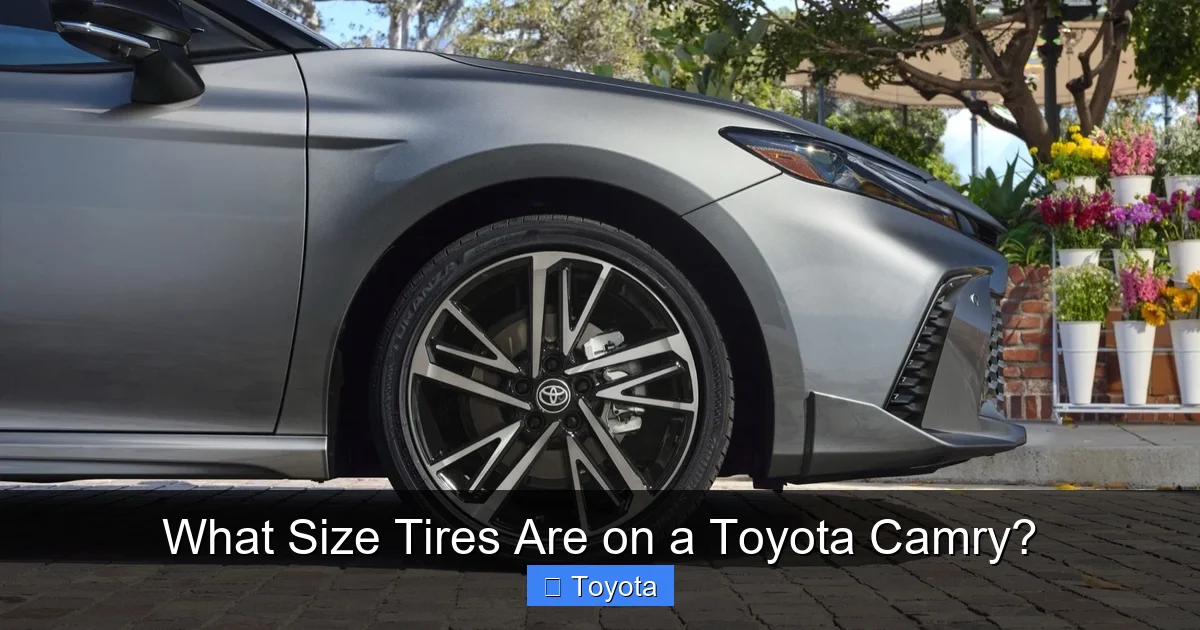
Most Toyota Camry models come with tire sizes ranging from 205/65R15 to 235/40R18, depending on the year, trim level, and wheel package. Knowing your exact tire size is essential for safe driving, proper fitment, and maintaining your vehicle’s performance. This guide breaks down Camry tire sizes by generation and shows you how to find the right fit for your specific model.
Key Takeaways
- Tire sizes vary by year and trim: Toyota Camry tire sizes typically range from 205/65R15 on base models to 235/40R18 on sportier trims.
- Check your door jamb placard: The driver’s side door jamb contains a sticker with the factory-recommended tire size and pressure.
- Generation matters: Fifth-generation (2012–2017), sixth-generation (2018–2024), and seventh-generation (2025+) Camrys often use different tire sizes.
- Wheel size affects tire size: Larger alloy wheels usually mean lower-profile tires, while smaller steel wheels use taller, narrower tires.
- Match load and speed ratings: Replacement tires should meet or exceed the original equipment specifications for safety.
- Regular maintenance extends tire life: Proper inflation, rotation, and alignment help your Camry tires wear evenly and last longer.
📑 Table of Contents
Introduction
If you drive a Toyota Camry, you already know it is one of the most reliable midsize sedans on the road. But when it comes time to replace your tires, one question always comes up: what size tires are on a Toyota Camry? The answer is not always simple because Toyota offers the Camry in several trims, and each trim can come with different wheel and tire combinations.
Choosing the wrong tire size can affect your speedometer reading, fuel economy, handling, and even safety systems like traction control. That is why it is so important to know the exact tire size for your specific model year and trim level. In this article, we will walk you through the most common Toyota Camry tire sizes, show you how to read your tire sidewall, and help you find the right rubber for your sedan.
Whether you drive an older Camry LE or a brand-new XSE, this guide will give you the information you need to shop with confidence. Let us dive in and take the guesswork out of Camry tire shopping.
Understanding Toyota Camry Tire Sizes
How to Read a Tire Size
Before we look at specific Camry models, it helps to understand what those numbers and letters on your tire actually mean. A typical tire size looks something like 215/55R17. Each part tells you something important about the tire.
The first number, 215, is the tire width in millimeters. The second number, 55, is the aspect ratio, which means the sidewall height is 55 percent of the tire width. The letter R stands for radial construction, and the final number, 17, is the wheel diameter in inches that the tire fits.
When you ask what size tires are on a Toyota Camry, you are really asking for this full code. Getting just one part wrong can mean the tire will not fit your wheel or your wheel well properly.
Common Toyota Camry Tire Sizes
Across recent model years, Toyota Camry tire sizes generally fall into a few common categories. Base models often come with 205/65R15 or 215/60R16 tires. Mid-level trims frequently use 215/55R17 tires. Sportier trims and higher wheel packages often come with 235/40R18 or 235/45R18 tires.
It is also worth noting that Toyota sometimes offers optional wheel packages. That means two Camrys from the same year and trim level could have different tire sizes if one buyer chose the larger alloy wheels. Always double-check your specific vehicle rather than assuming based on the model year alone.
Toyota Camry Tire Size by Generation
Fifth Generation Camry (2012 to 2017)
The fifth-generation Toyota Camry was sold from 2012 through 2017. During this period, tire sizes varied depending on the trim and engine choice.
The LE model usually came with 205/65R16 tires on steel wheels with covers. The SE model often came with 215/55R17 tires on alloy wheels. The XLE sometimes used 215/55R17 as well, though some higher trims moved up to 225/45R18 if they were equipped with the larger wheel option.
If you own a Camry from this era, check your door jamb sticker before ordering. The 2012 to 2017 Camry is a popular used car, and previous owners may have already changed the wheels or tires.
Sixth Generation Camry (2018 to 2024)
The sixth-generation Camry arrived for the 2018 model year and continued through 2024. This generation brought sharper styling and more trim options, which means more tire size variations.
The base L and LE trims typically came with 205/65R16 tires. The SE and XSE trims often came with 215/55R17 tires, while some XSE models with the larger wheel package used 235/40R18 tires. The XLE and XLE V6 usually rolled on 215/55R17 tires as well.
Toyota also offered the Camry TRD during this generation. The TRD trim came with performance-oriented 235/40R18 tires designed for better grip and handling. If you are shopping for a sixth-generation Camry, pay close attention to whether your car has the 17-inch or 18-inch wheel package.
Seventh Generation Camry (2025 and Newer)
The all-new seventh-generation Toyota Camry debuted as a 2025 model. One big change is that the new Camry is now a hybrid-only lineup in the United States. This shift also brought updated wheel and tire offerings.
Early information shows that base LE models come with 205/65R16 tires, while SE and XSE trims move up to 215/55R17 or 235/40R18 depending on the wheel package. Because this generation is brand new, tire options are still expanding in the aftermarket.
If you own a 2025 or newer Camry, your best bet is to check the tire placard on the driver’s door jamb. That sticker will list the exact factory tire size and recommended inflation pressure for your specific hybrid trim.
Trim Levels and Wheel Options
Toyota offers the Camry in several trim levels, and each one can change the answer to what size tires are on a Toyota Camry. To learn more about how these trims differ, you can explore what are the different Toyota Camry models.
LE Trim
The LE is usually the volume seller and focuses on comfort and value. It typically comes with smaller wheels and taller tire sidewalls. You will often see 205/65R16 tires on this trim. The taller sidewall provides a softer ride and helps protect the wheels from potholes.
SE and XSE Trims
The SE and XSE are sportier trims. They usually come with larger alloy wheels and lower-profile tires. Common sizes include 215/55R17 and 235/40R18. The lower profile improves cornering response but can feel firmer over rough pavement.
XLE and TRD Trims
The XLE blends luxury with comfort, so it often sticks with 215/55R17 tires for a balanced ride. The TRD trim is the performance flagship and comes with 235/40R18 tires mounted on unique alloy wheels. These tires are designed for maximum grip and a sporty driving feel.
How to Find Your Exact Camry Tire Size
Check the Tire Information Placard
The easiest way to find your factory tire size is to look at the tire information placard. This sticker is usually located on the driver’s side door jamb, visible when you open the door. It lists the original tire size, wheel size, and recommended cold tire pressure.
If the sticker is missing or faded, do not worry. You have other options to confirm your tire size.
Read the Sidewall of Your Current Tires
Look at the sidewall of the tires currently on your Camry. You will see a code like P215/55R17 93V. Write down the full code. Just keep in mind that if a previous owner installed non-stock wheels, these numbers might not match the factory specification.
Look in Your Owner’s Manual
Your Toyota Camry owner’s manual contains a specifications section that lists tire and wheel sizes by trim level. If you do not have the physical manual, many Toyota owners’ manuals are available online through Toyota’s official website.
Choosing the Right Tires for Your Camry
Once you know your tire size, you still have to choose the type of tire. The Camry is a daily commuter for most people, so all-season tires are the most popular choice. However, your climate and driving habits might lead you in a different direction.
All-Season Tires
All-season tires are the default for most Camry owners. They offer a good balance of wet and dry traction, decent tread life, and a quiet ride. Sizes like 215/55R17 and 205/65R16 are widely available in all-season versions from major brands.
Performance Tires
If you drive an SE, XSE, or TRD Camry, you might want performance tires. These tires offer better grip and handling but usually wear out faster and may not perform well in snow. The 235/40R18 size is common for performance applications on the Camry.
Winter Tires
If you live in an area with harsh winters, dedicated winter tires are worth considering. They stay flexible in freezing temperatures and provide much better snow and ice traction. You can buy winter tires in the same size as your all-season tires and swap them seasonally.
When you are ready to purchase, you might wonder whether to buy from a local shop or the dealer. You can read more about that decision in this article on should I buy tires from a Toyota dealership.
Tire Maintenance Tips for Toyota Camry Owners
Check Tire Pressure Monthly
Proper tire pressure is one of the easiest ways to extend tire life and improve fuel economy. Your Camry’s recommended pressure is listed on the door jamb placard. Check your tires when they are cold, ideally once a month and before long trips.
Rotate Your Tires Regularly
Toyota typically recommends rotating your Camry tires every 5,000 to 8,000 miles. Regular rotation helps the tires wear evenly, which means you get more miles out of each set. Since the Camry is a front-wheel-drive sedan, the front tires usually wear faster than the rear tires.
Watch for Uneven Wear
If you notice one side of a tire wearing faster than the other, you may have an alignment issue. Uneven wear can also signal that your suspension components need inspection. Addressing alignment problems early can save you from buying new tires sooner than necessary.
TPMS and Warning Lights
Your Camry is equipped with a Tire Pressure Monitoring System (TPMS) that alerts you when tire pressure is low. If the TPMS light comes on, check your tires right away. After adjusting pressure or rotating tires, you may need to reset the system. You can learn more about the reset process at where is the TPMS reset button on a Toyota Camry.
Conclusion
Knowing what size tires are on a Toyota Camry is about more than just reading a number on the sidewall. It is about keeping your sedan safe, comfortable, and performing at its best. Because tire sizes vary by model year, trim level, and wheel package, there is no single answer that fits every Camry.
Start by checking your driver’s door jamb placard or your current tire sidewall. Then match the size and ratings when you shop for replacements. Whether you drive a 2012 LE or a 2025 XSE hybrid, putting the right tires on your Camry will give you peace of mind every time you hit the road.
Take care of your tires with regular pressure checks, rotations, and alignments, and they will take care of you. Happy driving!
Frequently Asked Questions
What size tires are on a 2020 Toyota Camry?
Most 2020 Toyota Camry models come with either 205/65R16 or 215/55R17 tires, depending on the trim level. Sportier trims with larger wheels may use 235/40R18 tires.
Can I put larger tires on my Toyota Camry?
You can install larger tires, but only if they fit within the wheel well and do not rub against the suspension or fenders. Changing tire size can also affect your speedometer accuracy and fuel economy.
What is the most common Toyota Camry tire size?
The most common sizes are 205/65R16 for base trims and 215/55R17 for mid-level trims. Higher trims often use 235/40R18 tires.
How do I know if my Camry tires need replacing?
Check the tread depth using the penny test or a tread gauge. If the tread is worn down to 2/32 of an inch, or if you see cracks, bulges, or uneven wear, it is time for new tires.
Does tire size affect my Camry’s gas mileage?
Yes. Larger, heavier tires and lower-profile tires can increase rolling resistance and reduce fuel economy. Sticking with the factory-recommended size helps maintain your Camry’s efficiency.
Should I replace all four tires at once on my Camry?
Ideally, yes. Replacing all four tires at the same time ensures even traction and handling. If you must replace only two, put the new tires on the rear axle for better stability in wet conditions.


