What Is Eco Heat/cool on a Toyota Rav4?
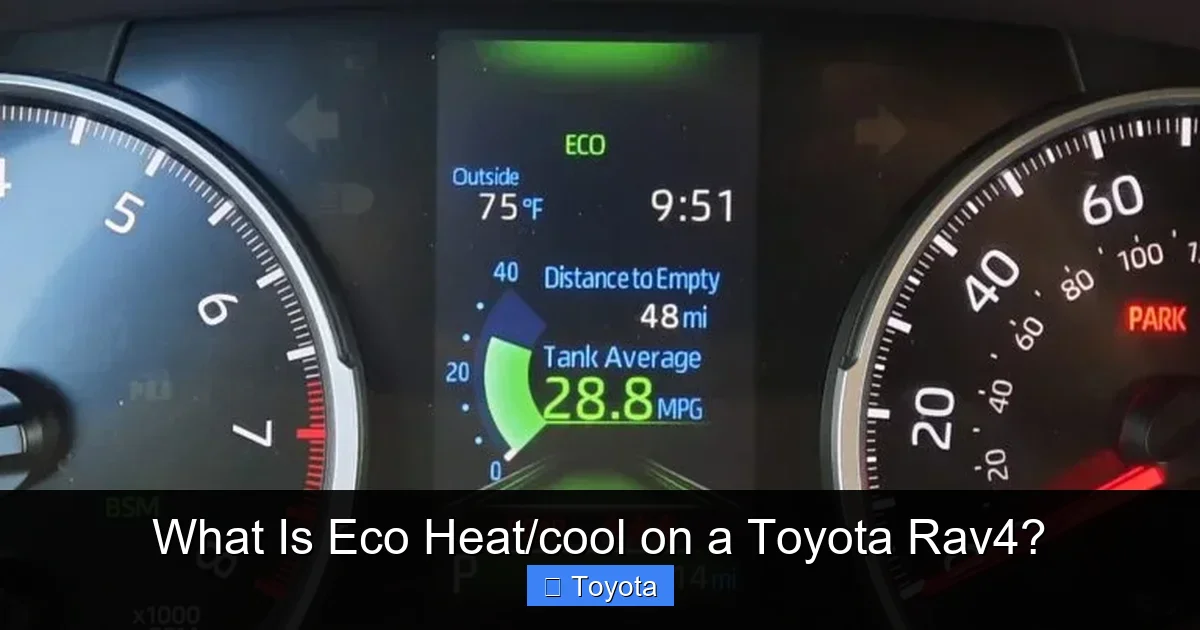
ECO Heat/Cool on the Toyota RAV4 is an intelligent climate control feature that automatically adjusts heating and cooling output to maximize fuel efficiency without compromising passenger comfort. It works by optimizing the HVAC system’s energy usage, especially during mild weather or stop-and-go traffic. Learning how it functions helps you balance comfort and efficiency on every drive.
Key Takeaways
- ECO Heat/Cool optimizes energy use: The system automatically moderates heating and cooling output to reduce fuel consumption, particularly in mild weather or light traffic.
- It activates based on conditions: Sensors detect cabin temperature, outside climate, and driving patterns to decide when ECO mode should engage.
- Comfort isn’t sacrificed: The feature balances efficiency with maintaining a pleasant interior temperature for all passengers.
- Regular maintenance helps: Clean air filters and proper coolant levels ensure the ECO climate system runs at peak performance.
- It’s not the same as drive mode ECO: ECO Heat/Cool specifically targets the HVAC system, while drive mode ECO adjusts engine and transmission behavior.
- Extreme weather may override it: In very hot or cold conditions, the system prioritizes rapid temperature adjustment over efficiency.
📑 Table of Contents
What Is ECO Heat/Cool on a Toyota RAV4?
If you’ve ever glanced at your RAV4’s dashboard and noticed a small icon or text labeled ECO Heat/Cool, you might have wondered what it actually does. In simple terms, ECO Heat/Cool is Toyota’s way of making your vehicle’s climate system more efficient without forcing you to manually tweak every setting. It’s an automatic feature that adjusts how hard the heating and cooling work based on the conditions around you. Think of it as a smart assistant for your cabin temperature that knows when to sip energy rather than gulp it down.
Toyota has integrated this feature across many of its newer models, and the RAV4 is no exception. The system is designed to work seamlessly with your regular driving, so you don’t have to pause your commute to optimize your comfort. Instead, the car’s computer monitors a variety of inputs—outside temperature, sunlight intensity, and even how many people are in the car—and makes real-time adjustments. The goal is to keep you comfortable while using less fuel, which is especially helpful during those daily trips around town.
How ECO Heat/Cool Works Behind the Scenes
The Role of Sensors
The magic of ECO Heat/Cool lies in the network of sensors scattered throughout your RAV4. A cabin temperature sensor constantly measures the air inside the vehicle, while an outside temperature sensor tells the system what the weather is like beyond the windows. There’s also a sunlight sensor, sometimes called a solar sensor, which detects how much direct sun is hitting the roof. All this data feeds into the vehicle’s main computer, allowing it to make precise decisions about when to ramp up the A/C or heater and when to ease up.
Activation Triggers
ECO Heat/Cool doesn’t run all the time. It typically activates when the system senses that maintaining your set temperature won’t require maximum effort. For example, if it’s a mild spring day and you’ve set the climate to 72 degrees, the system might use ECO mode to maintain that temperature with minimal energy use. However, if you’re driving in a heatwave or freezing winter, the system will prioritize getting your cabin to the desired temperature quickly, even if it means using more power. The transition is usually so smooth you might not even notice it happening.
Advantages of the Eco-Friendly Climate Feature
One of the biggest perks of ECO Heat/Cool is the potential for fuel savings. Because the HVAC system is one of the largest energy consumers in your vehicle outside of the engine itself, even small optimizations can add up over time. Over a year of driving, you might notice a slight improvement in your overall miles-per-gallon, especially if your routes involve a lot of stop-and-go traffic or moderate weather days.
Beyond the numbers at the pump, there’s also the benefit of consistent comfort. The system is designed to avoid the temperature swings that can happen when the heater or A/C blasts full power and then shuts off abruptly. Instead, ECO Heat/Cool tends to make smaller, more frequent adjustments, which many drivers find results in a more stable cabin environment. And because the system is automatic, you don’t have to remember to switch modes or adjust dials—it just works in the background.
There’s also a psychological win. Knowing your vehicle is running a bit more efficiently can make every drive feel a little greener, especially for those who are conscious of their environmental footprint. It’s a small change that adds up, both in your wallet and in the emissions coming from your tailpipe.
Misconceptions and Realities
Despite its benefits, ECO Heat/Cool is sometimes misunderstood. A common myth is that turning it on will make your cabin freezing in the summer or freezing in the winter. In reality, the system is designed to respect your temperature setting. It won’t let the interior get uncomfortable just to save a few drops of fuel. If the cabin gets too hot or too cold, the system will automatically override ECO mode to bring the temperature back to your preset level.
Another misconception is that ECO Heat/Cool is the same as the drive mode ECO button. While both aim to improve efficiency, they focus on different systems. The drive mode ECO adjusts engine response, transmission shift points, and sometimes throttle mapping to use less fuel. ECO Heat/Cool, on the other hand, is exclusively about the heating and cooling system. You can have one on without the other, or both on at the same time, depending on your RAV4’s trim and model year.
Some drivers also worry that using ECO Heat/Cool will wear out their climate components faster because the system is constantly adjusting. However, the system is engineered to make those adjustments within safe operating limits. In fact, by reducing the number of full-power cycles the heater or A/C has to run, ECO mode might actually contribute to less wear and tear over the long run.
Practical Tips for Everyday Use
Keep Your Cabin Air Filter Clean
A clogged or dirty cabin air filter can restrict airflow, forcing your HVAC system to work harder to push air into the cabin. When the system works harder, ECO Heat/Cool can’t do its job as effectively. Toyota recommends checking and replacing the cabin air filter every 15,000 to 30,000 miles, though you might need to do it sooner if you often drive in dusty or polluted areas. A clean filter not only helps the ECO feature but also improves overall air quality for you and your passengers. If you’re ready to swap out your filter yourself, here’s a guide on how to change the cabin air filter on a Toyota RAV4.
Check Your Coolant Levels
Proper coolant levels are essential for the heater to function efficiently, especially when ECO Heat/Cool is active. Coolant circulates through the heater core to warm the air that gets blown into the cabin. If levels are low, the system may struggle to maintain temperature, and the ECO feature may have to work overtime—or disengage entirely—to prevent issues. Make it a habit to glance at your coolant reservoir during regular maintenance checks, and top it off with the correct type of coolant specified for your RAV4. If you’re unsure which type to use, you can check what kind of coolant does a Toyota RAV4 use for the exact specifications.
Use Sunshades in Hot Weather
Even the most advanced sensor system has its limits. On especially sunny days, using a windshield sunshade can dramatically reduce the amount of heat that builds up inside your RAV4. When the cabin starts at a lower temperature, the ECO Heat/Cool system doesn’t have to work as hard to cool things down, which means it can stay in energy-saving mode longer. It’s a simple, low-cost trick that pairs perfectly with your vehicle’s eco-friendly features.
Don’t Override the System Unnecessarily
It can be tempting to manually set the A/C to max or the heater to high the moment you get in the car, especially on extreme weather days. But doing so can pull the system out of ECO mode and keep it there, even after the initial temperature goal is reached. Try starting with your usual settings and letting the ECO feature do its thing. If after a few minutes the cabin isn’t comfortable, then you can make manual adjustments.
When ECO Heat/Cool Might Not Engage
There are certain scenarios where you’ll notice ECO Heat/Cool staying quiet. Extreme weather is the most obvious—if it’s 100 degrees in the shade or 20 degrees below zero, the system’s primary goal becomes rapid temperature adjustment, not efficiency. Safety is the priority here; you want a comfortable cabin so you can focus on the road, not on fuel savings.
Another reason ECO Heat/Cool might stay dormant is if you’ve manually overridden the climate settings. If you press the A/C button directly, flip the heater dial to max, or use the recirculation button in a way that bypasses automatic modes, the system may disable ECO functionality until you return to fully automatic operation. Additionally, certain vehicle settings or aftermarket modifications can affect how the climate computer operates, so if you’ve added extra lighting, audio upgrades, or other electrical components, you might notice different behavior.
The good news is that even when ECO Heat/Cool isn’t active, your RAV4’s climate system is still efficient. Toyota designs its vehicles to be competitive in fuel economy across the board, so you’re not losing out entirely. It’s just that the extra “smart” layer of ECO mode is taking a backseat to more pressing temperature needs.
Conclusion
ECO Heat/Cool on a Toyota RAV4 is one of those features that’s easy to overlook until you really think about it. It’s a testament to how far automotive climate control has come—moving from simple dials and switches to intelligent systems that work with you, not against you. By automatically moderating heating and cooling output, it helps you save fuel, maintain a more consistent cabin temperature, and even potentially reduce wear on your HVAC components over time.
The key takeaway is that you don’t need to do anything special to make it work. Just set your desired temperature, let the system auto, and trust that your RAV4 is handling the rest. Of course, keeping up with basic maintenance—like those cabin air filters and coolant levels—will ensure the ECO feature can do its job without a hitch. Whether you’re commuting to work, running errands, or heading out on a road trip, ECO Heat/Cool is there in the background, making every drive a little more efficient and a lot more comfortable.
Next time you’re behind the wheel, take a moment to notice the little ECO indicator. It’s a small detail, but it represents a bigger shift toward smarter, more sustainable driving. And the best part? You don’t have to sacrifice comfort to get there.
For added comfort in colder months, you might also want to utilize the heated mirrors feature. Here’s how to turn on heated mirrors in a Toyota RAV4.
Frequently Asked Questions
What exactly does ECO Heat/Cool do on a Toyota RAV4?
ECO Heat/Cool automatically adjusts your RAV4’s heating and cooling output to optimize fuel efficiency while maintaining the cabin temperature you’ve set. It uses sensors to monitor inside and outside conditions, then makes real-time adjustments so the HVAC system doesn’t work harder than necessary.
Can I turn ECO Heat/Cool off manually?
Most RAV4 models don’t offer a manual on/off switch for ECO Heat/Cool specifically; it operates as part of the automatic climate control system. However, you can influence its behavior by manually adjusting temperature dials, A/C settings, or recirculation modes, which may cause the system to disengage ECO mode temporarily.
Does using ECO Heat/Cool actually improve gas mileage?
Yes, it can contribute to small but measurable fuel savings, especially during mild weather or stop-and-go driving. Because the HVAC system is a significant energy consumer, reducing its workload lessens the load on the engine, which can translate to better miles-per-gallon over time.
Will ECO Heat/Cool work the same way in winter and summer?
The core principle is the same—optimize energy use—but the system’s response differs by season. In summer, it moderates A/C compressor activity; in winter, it manages heater output. Extreme temperatures in either direction will cause the system to prioritize rapid cabin warming or cooling over efficiency.
Is ECO Heat/Cool the same as the drive mode ECO button?
No, they target different systems. The drive mode ECO button adjusts engine and transmission behavior to save fuel, while ECO Heat/Cool focuses exclusively on the climate control system. You can have both active at once, but they function independently.
How often should I service my RAV4’s climate system to keep ECO Heat/Cool working well?
Toyota recommends regular HVAC maintenance, including cabin air filter replacement every 15,000 to 30,000 miles and coolant checks during routine service intervals. Keeping these components in good shape ensures your ECO Heat/Cool system can operate at peak efficiency.