What Is Auto Lsd on a Toyota Tacoma?
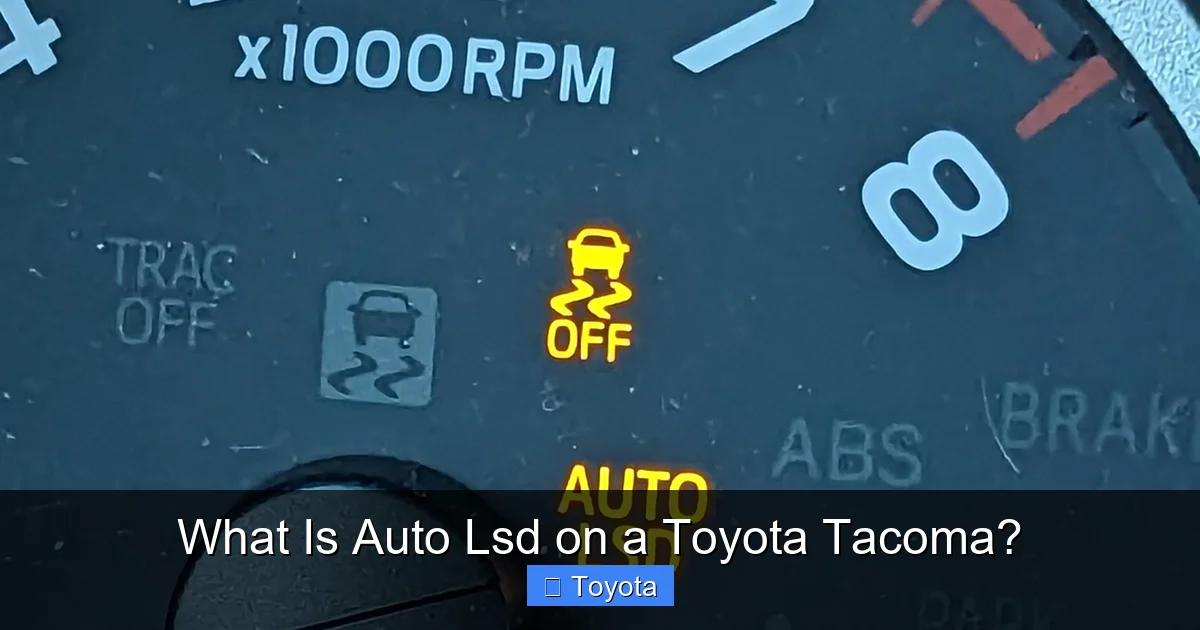
Auto LSD on a Toyota Tacoma is a traction helper. It gently brakes a spinning wheel so the Tacoma can move forward on mud, sand, snow, or gravel. It is not a low-range gearbox, and it works best at low speeds.
What Is Auto Lsd on a Toyota Tacoma?
If you see an Auto LSD light or button on your Toyota Tacoma, you may wonder what it means. The short answer is simple. Auto LSD helps your truck grip loose ground. It is a handy tool for dirt, sand, snow, and slick trails.
Many Tacoma owners think it is a type of four-wheel drive. It is not. Auto LSD works with the brakes. It helps send power to the wheel that can use it. This can keep your Tacoma moving when one tire starts to spin.
In this guide, we will explain Auto LSD on a Toyota Tacoma in plain language. You will learn what it does, when to use it, and what to watch for. We will also share easy tips for safer driving.
Key Takeaways
- Auto LSD helps grip: It uses the brakes to slow a spinning wheel and send power to the tire with traction.
- It is not 4WD: Auto LSD is a brake-based aid, while four-wheel drive uses the drivetrain to power all wheels.
- Best at low speed: It works well on sand, mud, snow, gravel, and rocky trails when you are moving slowly.
- Check your Tacoma year: Some models use a button, while others engage automatically when low grip is detected.
- Turn it off on dry roads: Leaving it on during normal driving can cause odd braking, noise, or extra wear.
- Tires still matter most: Good tread and proper tire pressure are more important than any traction button.
📑 Table of Contents
What Is Auto LSD on a Toyota Tacoma?
Auto LSD stands for automatic limited slip differential. The idea is simple. A normal open differential can send power to the wheel with the least grip. If one tire is on ice, that tire may spin. The truck can get stuck.
Auto LSD helps fix that. When a wheel spins, the system uses the brake on that wheel. This slows the spinning tire. Then more power can go to the tire with grip. It works fast, and it works without a mechanical locker.
On a Toyota Tacoma, Auto LSD is usually part of the traction control system. It is made for low-speed crawling. It is not meant for hard driving on dry pavement. It is a helper, not a magic button.
Open Differential vs Auto LSD
An open differential is common. It is smooth and cheap. But it has a weak spot. It sends power to the wheel with less grip. That can leave the other wheel doing nothing.
Auto LSD changes the result without changing the hardware. It uses brake pressure to slow the spinning wheel. This makes the open differential act more like a limited slip unit. It is a clever fix.
That is why many Tacoma drivers like it. It adds confidence without adding heavy parts.
How Auto LSD Works
Think of Auto LSD as a quick brake tap. Sensors watch wheel speed. If one wheel spins faster than the others, the system knows grip is low. The brake applies to that wheel. This creates resistance. The differential then sends torque to the other wheel.
The process is automatic. You do not need to press anything special once the mode is active. The Tacoma does the work. This is helpful when you are crawling over rocks, mud, or loose sand.
Why Toyota Uses It
Toyota wants the Tacoma to be easy to drive. A mechanical locker can be noisy and harsh. Auto LSD gives many of the benefits with less fuss. It helps average drivers feel more confident.
It also saves cost and weight. That can help fuel economy and ride comfort. The trade-off is that it is not as strong as a true locker. For most trail needs, it is enough.
When Should You Use Auto LSD?
Use Auto LSD when you need extra grip at low speed. Good examples include sand, mud, snow, gravel, and rocky trails. It can also help when one tire is off the ground or on a slick spot.
Auto LSD is most useful when you are moving slowly. It is not a fix for high-speed slides. If you are driving on a wet highway, use normal traction control and slow down. Auto LSD is for slow, tricky spots.
Turn it off when you are back on dry pavement. Leaving it on can cause odd braking or extra wear. It can also make tight turns feel less smooth. The system is best when you use it with care.
Auto LSD in Sand, Mud, and Snow
In sand, keep momentum gentle. Auto LSD can help if one tire digs in. In mud, use it to avoid spinning one tire into a rut. In snow, it can help when a tire hits a slick patch.
Rain alone does not always need Auto LSD. But wet gravel or a muddy shoulder can. Use the feature when the surface is loose. Do not use it as a speed aid.
If you feel the truck pushing straight, ease off. Let the system settle. Smooth inputs help.
When Not to Use It
Do not use Auto LSD on dry pavement for normal driving. It is not needed. It can cause brake drag or strange noises. Save it for loose ground.
Do not use it to power through deep water. Water depth is a separate risk. Auto LSD does not make your Tacoma waterproof. If water looks deep, turn around.
Use common sense. If the road is normal, leave the feature off.
Auto LSD vs 4WD Low
Many drivers ask how Auto LSD compares with four-wheel drive low. They are different tools. Four-wheel drive low uses a lower gear range for more control. It is great for steep hills and deep mud.
Auto LSD does not change gears. It uses brakes to help grip. In some cases, Auto LSD can help when you do not want to shift into 4WD Low. If you need to leave four-wheel drive later, knowing how to get a Toyota Tacoma out of 4 wheel drive can help.
Auto LSD is not a full locker. A locker can send equal power to both wheels. Auto LSD is gentler and less aggressive. That makes it easy to use, but it has limits.
How to Turn On Auto LSD
The exact steps can vary by Tacoma year and trim. In many models, you press the Auto LSD button. The light on the dash turns on. In some trims, Auto LSD may engage automatically when the system detects low grip.
Check your owner’s manual for your truck. Look for the traction control or Auto LSD section. If the button does not respond, the system may have a fault. A warning light can mean the feature is disabled.
Before you use it, stop in a safe spot. Slow down. Make sure the road or trail is clear. Auto LSD is not a reason to drive fast. It is a reason to be more careful.
What You See and Feel
When Auto LSD works, you may feel a soft brake pulse. You might hear a light grinding or clicking sound. That is normal. The truck may seem to pause for a moment. Then it should pull ahead.
If the light flashes, the system is working. If it stays off, check the button or the manual. If the light stays on with a warning, have the truck checked.
Auto LSD Light Meanings
A steady light usually means the feature is on. A flashing light often means it is working. If the light does not come on, check the button, the manual, and any warning messages.
Some Tacoma models may not have a separate button. The system may turn on by itself. In that case, the dash light is your guide. If you see a traction warning, slow down and check the surface.
Auto LSD Limits and Common Mistakes
Auto LSD is helpful, but it is not perfect. It cannot create grip where there is none. If all four tires are on ice, brakes alone may not help much. You still need good tires and safe speed.
One common mistake is using it on dry pavement. The system may brake a wheel during tight turns. That can cause noise or odd handling. Another mistake is expecting it to replace 4WD Low. It is a helper, not a full off-road mode.
Also, Auto LSD can heat up the brakes. Long, heavy use may reduce performance for a short time. If you feel the pedal get soft or the truck slows oddly, take a break. Let the brakes cool.
Auto LSD and Fuel Use
Auto LSD does not usually change fuel use much. It works for short moments. The bigger fuel factors are tires, load, and speed.
Still, extra brake use can add wear. If you leave it on by mistake, you may notice more brake noise. Turn it off when you do not need it.
Small habits help. Check the dash light before you drive away.
Tire and Brake Health
Tires matter most. Worn tread cannot grip well. Mismatched sizes can confuse the system. Keep all tires in good shape and close to the same size.
Brakes also matter. Auto LSD uses them often. If you hear grinding, feel vibration, or see a brake warning, stop using the feature. Get the brakes checked. A healthy truck makes Auto LSD work better.
This is simple care. It protects the system and your safety.
Auto LSD and Other Tacoma Features
Auto LSD works with other Tacoma systems. Traction control watches wheel slip. The RSCA button on a Toyota Tacoma can affect stability and traction settings. These systems share sensors and goals. They all try to keep the truck stable.
If you want to compare how Toyota uses similar traction help, the Auto LSD meaning on a Toyota Tundra article explains the same basic idea. The Tacoma and Tundra both use smart brake control to improve grip.
Practical Tips for Driving With Auto LSD
Start slow. Auto LSD works best when the Tacoma is moving at a crawl. Give the truck time to react. If you rush, the system may not help as much.
Use steady throttle. Do not spin the tires hard. A gentle right foot helps the brakes do their job. If you get stuck, stop, check your path, and try a smoother line.
Keep your tires healthy. Good tread and proper pressure matter more than any button. Check tire pressure before a trip. Clean mud and snow from wheel wells when you can.
Know your truck. Every Tacoma year can feel a little different. Read the manual. Practice in a safe area. That makes Auto LSD on a Toyota Tacoma easier to trust when you need it.
Simple Trail Checklist
Before a trail, check tires, fuel, and the manual. Look for mud, rocks, or deep sand. Plan a slow route. Tell someone where you are going.
During the drive, use Auto LSD only when needed. If you stop, take a breath. Look at your line. Back up if you must. Small moves are safer than big spins.
After the trail, turn the feature off if it is still on. Clean the truck when you can. Check for damage.
Auto LSD for Beginners
If Auto LSD is new to you, practice in an empty lot. Use cones or markers. Try a gentle turn. Feel how the truck responds.
Keep the speed low. Watch the dash. Learn what normal feels like. That practice builds skill. It also makes the feature less mysterious.
You do not need a trail to learn. A quiet street can work too.
Auto LSD and Other Drivers
If you ride with friends, explain what Auto LSD does. Some passengers may feel the brake pulses. Tell them it is normal. This keeps the ride calm.
If you are driving with a trailer, be extra careful. Auto LSD helps with traction, not braking distance. Leave more space. Slow down before turns.
A smooth driver is safer than a fast one. Use the truck’s tools with care.
That is the best way to enjoy the Tacoma.
Conclusion
Auto LSD is a smart traction helper. It uses the brakes to reduce wheel spin. It can help your Tacoma move through sand, mud, snow, and loose rocks. It is not a locker, and it is not a replacement for careful driving.
Use it at low speed. Use good tires. Turn it off when you return to dry roads. With a little practice, Auto LSD on a Toyota Tacoma can make off-road driving feel calmer and more controlled.
Remember, Auto LSD is a tool. It works best with patience. If you are unsure, check the owner’s manual or ask a Toyota technician. The more you understand your Tacoma, the better you can use its features.
Frequently Asked Questions
What does Auto LSD mean on a Toyota Tacoma?
Auto LSD means automatic limited slip differential. It uses the brakes to reduce wheel spin. This helps the Tacoma keep moving on loose ground.
Is Auto LSD the same as 4WD?
No. Auto LSD is a traction aid that uses brakes. Four-wheel drive sends power to all four wheels through the drivetrain.
When should I use Auto LSD?
Use it at low speed on sand, mud, snow, gravel, or rocks. It is not for normal highway driving.
Does Auto LSD work automatically?
On some Tacoma models, yes. On others, you press a button. Check your owner’s manual for your exact truck.
Can Auto LSD replace a locking differential?
Not fully. It helps with mild traction needs. A locker is stronger for extreme off-road use.
What if the Auto LSD light stays on?
A steady light may mean the system is on. A warning or flashing pattern can mean a fault. Check the manual and have the truck inspected if needed.