How Much Can a Toyota Rav4 Tow?
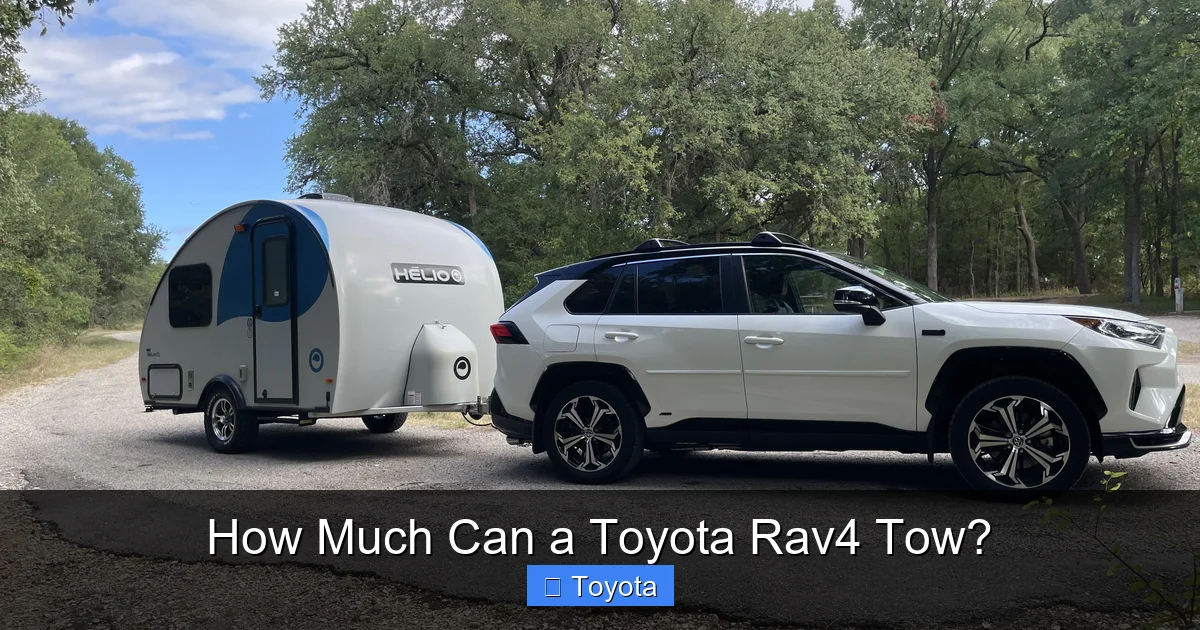
The Toyota RAV4 can tow between 1,500 and 3,500 pounds depending on the model year, engine, and trim level, making it a capable compact SUV for light to moderate hauling tasks. In this guide, we’ll break down the exact numbers, explain how engine choice impacts your haul, and share practical tips to stay safe on the road.
When it comes to hauling gear, bikes, or a small trailer, many Toyota RAV4 owners ask, “How Much Can a Toyota RAV4 Tow?” The answer isn’t a single fixed number. It shifts depending on the model year, engine type, and even the trim you choose. In this in-depth guide, we’ll explore the official towing capacities straight from Toyota, explain how different powertrains affect your haul, and give you real-world advice so you can tow with confidence. From understanding the difference between a 1,500-lb and 3,500-lb rating to knowing which hitch setup keeps your ride stable, we’ve got you covered.
Key Takeaways
- Towing capacity ranges from 1,500 to 3,500 lbs: The exact number depends on the RAV4’s model year, engine type, and trim level.
- 2.5L Dynamic Force engine maximizes pull: Most non-hybrid RAV4s equipped with the 2.5L engine can tow up to 3,500 lbs when properly configured.
- Hybrid models have lower capacity: RAV4 Hybrid versions are typically rated for 1,500 lbs, focusing on efficiency over heavy-duty towing.
- Weight distribution matters: Properly distributing trailer weight and using a weight-distributing hitch can improve stability and safety.
- Check your specific model year: Towing specs changed significantly between older RAV4s and newer ones, so always verify your VIN or owner’s manual.
- Fuel economy drops when towing: Expect a significant decrease in mpg; plan fuel stops accordingly on longer trips.
- Maintenance impact: Towing puts extra stress on the engine, transmission, and brakes; regular service is essential for longevity.
📑 Table of Contents
- Toyota RAV4 Towing Capacity: The Official Numbers
- How Engine Choice Shapes Towing Power
- Model-Year Evolution: How Numbers Changed Over Time
- Real-World Towing: What You Can Actually Pull
- Safety First: Tips for Towing with a RAV4
- Maintenance and Long-Term Ownership
- Summary: Knowing Your RAV4’s Limits
- Conclusion
Toyota RAV4 Towing Capacity: The Official Numbers
Toyota publishes towing ratings in the owner’s manual, and they’re based on a properly equipped vehicle with the right hitch, brakes, and load distribution. Most RAV4 trims equipped with the 2.5L Dynamic Force engine and all-wheel drive can tow up to 3,500 pounds when properly configured. However, front-wheel-drive versions of the same engine are often rated for 1,500 pounds. The hybrid models sit at the lower end, typically offering a 1,500-lb maximum, prioritizing fuel economy over maximum pull.
Manufacturer Specifications
The ratings you see in brochures come from controlled testing with a standard driver and trailer. Real-world conditions like altitude, temperature, and road grade can affect actual pulling power, so always build in a safety margin.
Base vs. Max Towing
Base trims might have lower ratings if they lack the cooling or suspension upgrades found on higher trims. Checking the specific trim level’s guide is essential before hitching up.
How Engine Choice Shapes Towing Power
When buyers ask, “How Much Can a Toyota RAV4 Tow?” the engine choice is the first factor to consider. Choosing between the gas 2.5L and the Hybrid RAV4 comes down to what you plan to pull. The gas engine’s straightforward design makes it easier to hit the 3,500-lb mark, especially with the right axle ratio. The Hybrid RAV4, while zippy in city driving, is limited to lighter loads. Its battery pack and electric motor add complexity to the cooling system, and Toyota caps the rating at 1,500 lbs to protect the powertrain.
If you find yourself needing more towing capacity than the RAV4 can offer, the 2023 Toyota Tacoma provides a significant jump in ratings, which you can read about in our 2023 Toyota Tacoma towing capacity guide.
Front-Wheel Drive vs. All-Wheel Drive
All-wheel-drive RAV4s generally have a higher towing capacity because the system can better manage traction when starting with a heavy load. Front-wheel-drive models can still tow, but you’ll want to be more conservative with weight and consider a weight-distributing hitch to prevent the rear end from sagging. Traction control and stability systems also play a big role when merging onto highways with a trailer in tow.
Model-Year Evolution: How Numbers Changed Over Time
The first few RAV4 generations were modest in their towing capabilities, often maxing out around 1,500 lbs regardless of engine. These early models were designed for urban flexibility, not heavy-duty hauling. If you’re looking at a used early-generation RAV4, don’t expect more than a small utility trailer or a couple of jet skis.
Toyota significantly increased towing ratings with the 2013 refresh and again with the 2019 and 2023 redesigns. The 2019 RAV4, for example, introduced the 2.5L Dynamic Force engine across more trims, bumping the maximum to 3,500 lbs for AWD versions. If you’re curious about the 2019 RAV4’s curb weight and how it relates to its towing ability, you can find the details on how much a 2019 Toyota RAV4 weighs. The 2023 model refined the chassis and cooling, maintaining the 3,500-lb rating while improving stability. Always check your specific model year’s manual, as ratings can shift even within the same model generation.
Real-World Towing: What You Can Actually Pull
In practical terms, a 3,500-lb rating means you can comfortably pull a small utility trailer, a couple of all-terrain vehicles, or a compact camper trailer. A typical 16-foot utility trailer with gear weighs between 500 and 1,000 lbs empty, plus the weight of your cargo. If you’re planning to tow a motorcycle trailer, expect the total loaded weight to be around 1,200 to 1,800 lbs, which sits well within the RAV4’s capacity. Small travel trailers often start at 2,500 lbs and go up, so always weigh your setup on a scale before hitting the road.
Weight Distribution and Hitch Selection
Proper weight distribution is the unsung hero of safe towing. About 60% of the trailer’s tongue weight should rest on the hitch, with the remaining 40% balanced over the trailer’s axles. Using a weight-distributing hitch can spread that load across the RAV4’s suspension and the trailer’s axles, reducing sway and improving braking. Make sure your hitch class matches the RAV4’s rating—typically a Class 3 hitch for the 3,500-lb capacity.
Safety First: Tips for Towing with a RAV4
Many states require electric trailer brakes once you exceed a certain weight threshold, usually around 3,000 lbs. Even if not legally required, a brake controller is a smart investment. It sends an electrical signal to the trailer brakes, allowing them to share the stopping force with your RAV4’s brakes. This reduces wear on your vehicle’s stopping system and shortens stopping distances, especially on downhill stretches.
Brake Controller and Trailer Brakes
Choose a proportional brake controller that adjusts braking force based on your trailer’s weight. Test it in a safe parking lot before hitting busy roads to ensure the trailer and vehicle slow down in unison.
Tire Pressure and Load Ratings
Towing increases the stress on your tires. Check your tire pressure when the tires are cold, and don’t exceed the maximum load rating printed on the sidewall. Many RAV4 owners find that slightly increasing pressure within the recommended range helps support the extra weight, but always stay within the manufacturer’s limits. Also, inspect your tires for wear before every long trip with a trailer attached.
Maintenance and Long-Term Ownership
Towing puts extra demand on your RAV4’s transmission and engine cooling system. Long trips with a heavy load can cause transmission fluid temperatures to rise. If you tow frequently, consider installing an auxiliary transmission cooler. This aftermarket addition helps maintain optimal fluid temperatures, extending the life of your transmission. Also, keep up with regular oil changes and fluid checks, as the engine works harder under load.
Speaking of long-term value, if you’re curious about how much a 2015 Toyota RAV4 is worth in today’s market, you can check out our detailed valuation guide. It’s a helpful reference when deciding whether your current RAV4 fits your towing budget. 2015 Toyota RAV4 worth information can help you gauge resale potential.
Transmission and Cooling Considerations
Towing increases heat generation in the transmission. An auxiliary cooler is a worthwhile investment for frequent towers, as it prevents overheating and premature wear. Pair this with regular fluid analysis to catch issues early.
Resale Value Impact
A RAV4 that has been well-maintained and used for light to moderate towing can still command a strong resale price. However, excessive towing beyond the rated capacity or neglecting maintenance can lower value. Buyers often look for service records and signs of wear on the transmission or suspension. If you plan to keep your RAV4 for years, staying within the recommended towing limits is one of the best ways to protect its long-term worth.
Summary: Knowing Your RAV4’s Limits
At the end of the day, the question “How Much Can a Toyota RAV4 Tow?” has a clear answer once you know your model year and engine. The range spans from 1,500 to 3,500 pounds, with the 2.5L AWD setup offering the most muscle. Hybrid owners should aim for lighter loads, and front-wheel-drive drivers should use hitch aids to compensate for reduced capacity. By understanding these numbers and following the safety tips above, you can make the most of your RAV4’s towing ability without compromising safety or reliability.
If you’re also planning a trip and need to know fuel range, you might wonder how many gallons a RAV4 holds. Our guide on how many gallons does a Toyota RAV4 hold can help you plan stops when hauling a trailer.
Conclusion
Towing with a Toyota RAV4 is entirely feasible for the right tasks, whether you’re hauling camping gear, a small boat, or a utility trailer. The key is matching the load to your specific trim and engine, using the right hitch and safety equipment, and keeping up with maintenance. With the right preparation, your RAV4 can handle more than you might expect, making it a versatile companion for both daily drives and weekend adventures.
Frequently Asked Questions
Does the Toyota RAV4 Hybrid have a lower towing capacity than the gas model?
Yes, the RAV4 Hybrid is typically rated for 1,500 lbs, while the gas 2.5L engine can reach up to 3,500 lbs depending on the drivetrain. This difference exists because the hybrid system’s cooling and structural design prioritize fuel efficiency over maximum pull.
Can a front-wheel-drive RAV4 tow 3,500 lbs?
No, front-wheel-drive RAV4s with the 2.5L engine are generally rated for 1,500 lbs of towing capacity. All-wheel drive is required to achieve the higher 3,500-lb rating, as the AWD system provides better traction and weight management when starting with a heavy load.
What type of hitch is recommended for towing with a RAV4?
A Class 3 hitch is typically recommended for RAV4 models with 3,500-lb towing capacity. Using the correct hitch class ensures proper weight distribution and safety, and it’s important to match the hitch to your specific model year and engine to avoid sway or instability.
How does towing affect fuel economy on the RAV4?
Towing significantly reduces fuel economy, often cutting mpg by 30% to 50% depending on the load and terrain. The engine works harder, and increased aerodynamic drag from the trailer further impacts efficiency, so plan for more frequent fuel stops on long trips.
Is a brake controller necessary for towing with a RAV4?
If your trailer has electric brakes and you’re towing near the RAV4’s capacity rating, a brake controller is highly recommended. It allows the trailer brakes to share the stopping load, reducing wear on your vehicle’s brakes and improving safety, especially on downhill grades where trailer sway is more likely.
Can I increase my RAV4’s towing capacity with modifications?
Modifications like adding a transmission cooler or a weight-distributing hitch can help you stay within safe operating limits, but they don’t increase the manufacturer’s rated towing capacity. Exceeding the rated limit voids warranties and compromises safety, so always adhere to the official numbers and consult your owner’s manual before making any changes.