Toyota 4runner Years to Avoid
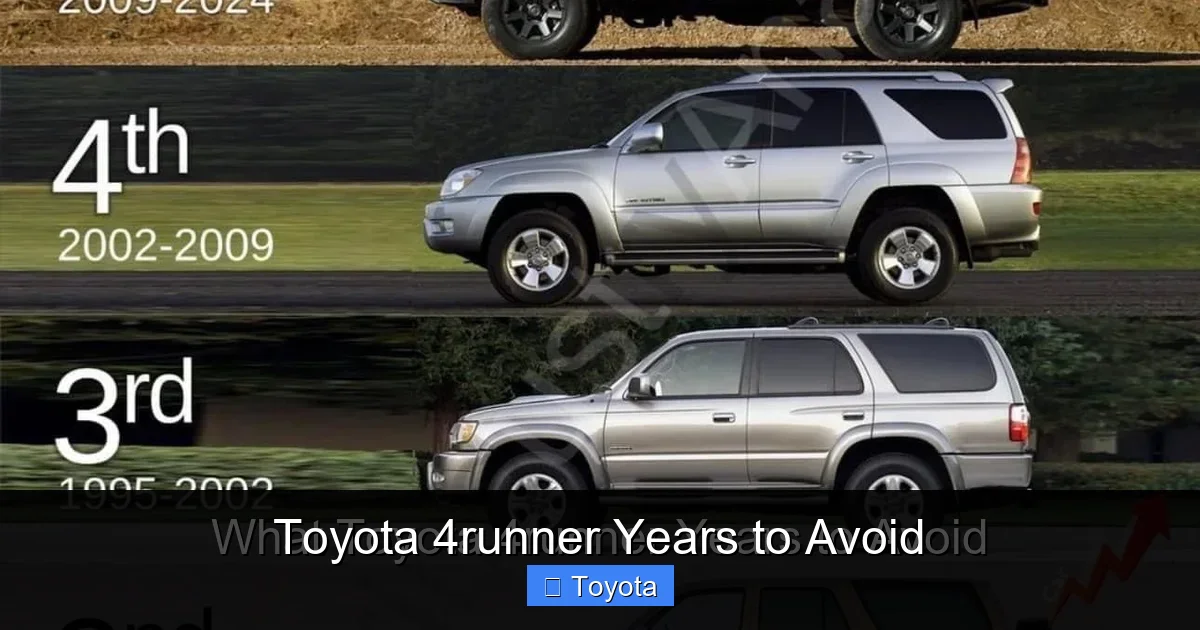
If you are shopping for a used Toyota 4Runner, you have probably heard that some model years are better than others. While no car is perfect, certain Toyota 4Runner years to avoid stand out for engine, transmission, electrical, or off-road problems. This guide covers the most common problem years and what to check before you buy.
The Toyota 4Runner is one of the best-selling SUVs in the world. It is known for its body-on-frame design, rugged looks, and ability to go from pavement to trail. Many owners love the 4Runner because it is simple to fix and can handle rough roads. However, no vehicle is perfect. When buyers start looking at used Toyota 4Runner models, they often ask about Toyota 4Runner years to avoid. The truth is that some model years have known problems that can turn a fun weekend adventure into a costly repair.
This article is not meant to scare you away from the 4Runner. Instead, it is meant to help you make a smart choice. We will look at problem years, common engine issues, transmission worries, and electrical faults. We will also talk about what to check before you buy. By the end, you should know more about the Toyota 4Runner years to avoid and how to spot a good deal.
Buying a used 4Runner can be a great decision. The truck is durable and fun. But you need to be careful. The used market is full of cars that were well cared for and cars that were not. A bad year can mean expensive repairs. A good year can mean years of service. That is why the topic of Toyota 4Runner years to avoid gets so much attention.
Key Takeaways
- Engine problems: Some Toyota 4Runner years to avoid have known engine issues that buyers should inspect.
- Transmission concerns: Certain older 4Runner models may have transmission or drivetrain failures.
- Electrical faults: Bad years can bring radio, VSC, or Trac light issues.
- Off-road reliability: Years with weak four-wheel drive systems may not be worth the risk.
- Recalls: Always check for open recalls before buying a problem year.
- Maintenance: Regular oil changes and fluid checks can help a used 4Runner.
📑 Table of Contents
Why These Toyota 4Runner Years to Avoid Matter
The Toyota 4Runner has been built in several generations. Each generation has its own strengths and weaknesses. Some years are great. Some years are not. When people ask about Toyota 4Runner years to avoid, they usually mean years with higher failure rates. These failures can affect the engine, transmission, suspension, or electronics.
Engine and Drivetrain Red Flags
The 4Runner has used a few different engines over the years. The older models used a V6, while newer models used a V6 or a turbocharged four-cylinder. Some of these engines are known to have oil consumption or intake leaks. The transmission is also important. A bad transmission can make a 4Runner unsafe on the highway.
For example, an oil leak is not a small issue. It can lead to low oil pressure. Low oil pressure can damage the engine. A transmission slip is also serious. It can cause loss of power and safety problems. These are common reasons to put certain Toyota 4Runner years to avoid on your list.
Another drivetrain issue is the transfer case. Some older 4Runners had weak transfer case seals. A leak can cause the four-wheel drive system to fail. If you plan to use the truck off road, this is very important. You should check the transfer case fluid and look for metal shavings.
Electrical and Off-Road Systems
The 4Runner also has off-road systems like four-wheel drive and traction control. If the system has a fault, the check engine light or the VSC and Trac light may come on. If your 4Runner flashes the VSC or Trac light, our guide on how to turn off VSC Trac light on a Toyota 4Runner explains the steps.
The electrical system can also cause problems. The radio may stop working. The windows may not roll up. The dashboard lights may flicker. These issues are often linked to bad grounding or bad sensors. A pre-purchase inspection can catch these problems.
Early Toyota 4Runner Years to Avoid
The first few generations of the 4Runner are now old enough to have real world problems. The years to avoid in this group often come from the mid to late 1990s.
1995 and 1996
The 1995 and 1996 model years are often mentioned when people list Toyota 4Runner years to avoid. These years had the 4.0 liter V6 engine. Some owners reported oil leaks and valve cover issues. The rear axle could also wear out. If you find a low mileage 1995 or 1996 4Runner, check the oil history closely.
Ask the seller how many miles are on the car. Ask for oil change receipts. A clean oil record can help you trust the engine. A dirty oil record is a red flag. Also check the rear axle fluid. A leak here can cause a loud noise and a dangerous failure.
Some owners also had issues with the rear main seal. This can cause oil leaks. It can also cause engine damage if ignored. A mechanic should check the engine for any signs of wear. The timing chain or seals may be old. The 4.0 liter V6 is known to have some oil issues over time.
For a deeper look at problem years, check out our guide on what year Toyota 4Runner should you avoid. It can help you narrow down the worst models.
2000s Toyota 4Runner Years to Avoid
The 2000s brought new engines and new body styles. Some of these years are still good, but a few stand out as problem years.
2002 and 2003
The 2002 and 2003 4Runner used a 4.0 liter V6. Some owners had issues with the rear differential and suspension bushings. These are big problems because they affect safety and comfort. The rear differential can fail and cause a loud whine. The suspension bushings can wear and cause loose handling.
Another common issue was the front wheel bearing. A bad wheel bearing can cause a grinding noise. It can also affect safety. The owner should check for any steering or handling problems.
2005
The 2005 model year is sometimes listed in lists of Toyota 4Runner years to avoid. The 4.0 liter V6 may have had camshaft or oiling system issues. A leak can cause low oil pressure. That is a serious engine risk. A pre-purchase inspection is a must.
2008
The 2008 4Runner had a 4.0 liter V6. Some owners reported engine noise and oil consumption. The intake gasket was a common weak point. If you buy this year, ask for a pre-purchase inspection. Do not skip the mechanic.
2010s Toyota 4Runner Years to Avoid
The 2010s are a mixed bag for the 4Runner. Toyota fixed many older issues, but new problems still appeared.
2010 and 2011
The 2010 and 2011 4Runner are often discussed in forums about Toyota 4Runner years to avoid. The 4.0 liter V6 had some oil consumption reports. The transmission also had software updates. A bad transmission is a major reason to skip these years.
2013 and 2015
The 2013 and 2015 models had the 4.0 liter V6. Some owners reported the rear control arm or suspension wear. The electrical system could also have glitches. These are not always deal breakers, but they are worth checking.
What About Newer Toyota 4Runner Years?
Newer years are often better. The 2018 and newer models use a 3.5 liter V6 or a 2.4 liter turbo. These engines are generally more modern. However, some 2018 to 2020 models had issues with the infotainment system and turbo failures.
2018 and newer
If you want a used 4Runner with fewer known problems, look at 2018 and newer. The 2018 model had a 3.5 liter V6. The 2019 model had a 2.4 liter turbo. The 2020 model had both options. Still, check for rust, accident damage, and service records. A clean history is very important.
Final Thoughts
The best time to buy a used Toyota 4Runner is when you find a well maintained example. Avoid the worst Toyota 4Runner years to avoid if you can. The 1995 and 1996, 2002 and 2003, 2005, 2008, 2010 and 2011 years are common red flags. Always do a pre-purchase inspection. Check the oil, transmission, and suspension. For technical codes, see what does H4L mean on a Toyota 4Runner.
Take your time when shopping for a used 4Runner. Read owner forums. Check recall history. Ask about maintenance. A little work now can save you a lot of money later. The right Toyota 4Runner can be a great vehicle for years of adventure. The wrong year can bring nothing but headaches.
Frequently Asked Questions
What is the worst Toyota 4Runner year?
The worst Toyota 4Runner year is often considered the 1995 or 1996 model. However, other years like 2002 and 2003 also have known issues. The final answer depends on mileage and maintenance.
Are Toyota 4Runner years to avoid different for used models?
Yes. Higher mileage examples from problem years are riskier. A well kept 2015 4Runner may be better than a neglected 2008 4Runner.
What engine problems occur in bad 4Runner years?
Common issues include oil leaks, valve cover problems, intake gasket leaks, and oil consumption. These can lead to low oil pressure or engine damage.
Do 4Runner years to avoid have transmission issues?
Yes. Some older 4Runner models have transmission failures. The 2010 and 2011 years are often mentioned for transmission software and reliability concerns.
How can I tell if a 4Runner has a problem?
Look for warning lights, strange noises, fluid leaks, and rough driving. A pre-purchase inspection is the best way to know.
Is it safe to buy a used Toyota 4Runner with low miles?
Yes, if the records are clean. Low miles do not always mean low risk, but a neglected low mile car can have hidden issues.