
How Long Can I Extend My Toyota Lease?
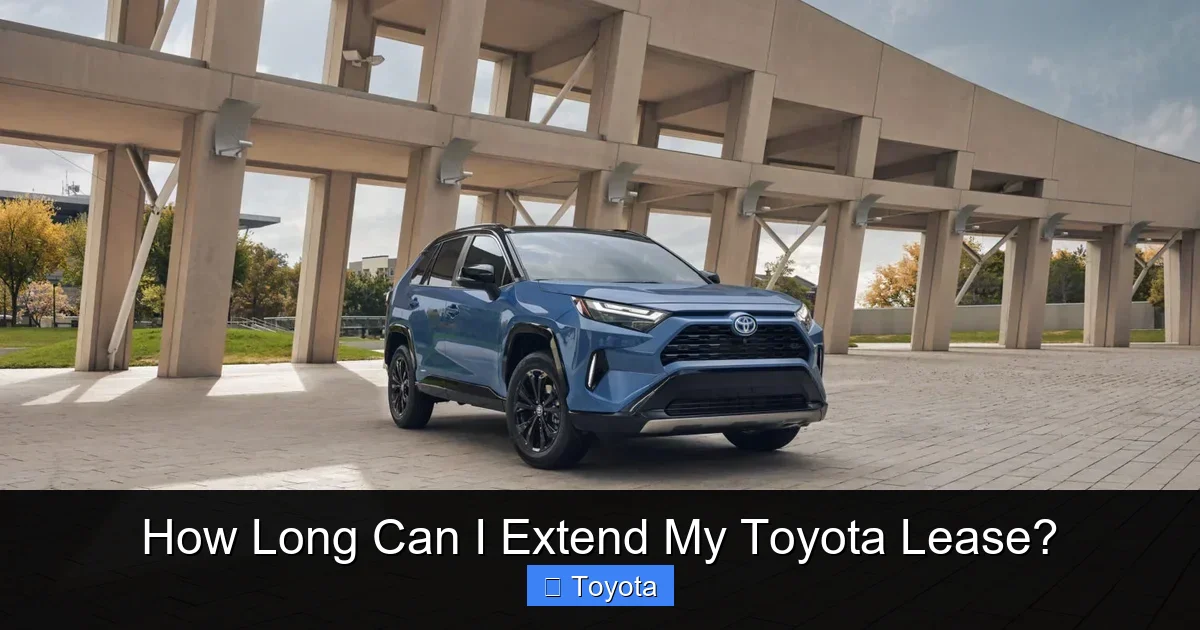
Toyota lease extensions typically range from one month up to 12 months, depending on your contract and Toyota Financial Services approval. Most lessees use extensions to bridge the gap until a new vehicle arrives or to decide on a buyout. Always contact your dealer early to discuss mileage limits and monthly payment adjustments.
Your Toyota lease is coming to an end, but you aren’t quite ready to let go of your Camry, RAV4, or Tacoma. Maybe your new vehicle is delayed, or you need more time to decide between buying out the lease or starting a fresh one. Whatever the reason, you are probably asking, how long can I extend my Toyota lease? The short answer is that most extensions last from one month up to a full year. The exact length depends on your specific contract, your payment history, and what Toyota Financial Services allows. In this guide, we break down everything you need to know about extending your Toyota lease so you can make the best decision for your situation.
Lease extensions are more common than you might think. Supply chain issues, new model waits, and personal budget changes all lead drivers to ask for extra time. Toyota Financial Services (TFS) has a structured process for this, but it helps to understand the rules before you call your dealer. We will cover typical extension lengths, the two main types of extensions, pros and cons, step-by-step instructions, and what happens when the extension finally ends. By the end, you will feel confident navigating the process and avoiding surprise fees.
Key Takeaways
- Standard extension length: Most Toyota lease extensions last between 1 and 12 months, with 3 to 6 months being the most common.
- Approval required: You must get approval from Toyota Financial Services (TFS) before your original lease end date.
- Monthly payments continue: You keep paying the same monthly amount unless you negotiate a change, and mileage allowances usually stay the same.
- Two main types: Choose between a formal contract extension or an informal month-to-month arrangement.
- Plan ahead: Start the process 60 to 90 days before your lease ends to avoid gaps in coverage or late fees.
- End-of-extension options: After the extension, you can return the car, buy it, or lease a new Toyota.
- Maintenance matters: Keep up with scheduled service and consider ToyotaCare coverage to avoid excess wear charges.
📑 Table of Contents
Understanding Toyota Lease Extensions
What Is a Lease Extension?
A lease extension is a formal agreement that lets you keep your leased Toyota beyond the original contract end date. You continue making monthly payments, and the vehicle stays in your possession. The extension is a new contract addendum, not a brand-new lease. Your original terms like mileage allowance, residual value, and monthly payment usually carry over unless you negotiate changes.
Why Extend Your Toyota Lease?
Drivers extend leases for many practical reasons. The most common is waiting for a factory-ordered vehicle to arrive. If you ordered a new Toyota Sienna or Tacoma, you might face a wait of several months. An extension bridges that gap without forcing you into a short-term rental. Other reasons include needing time to save for a down payment on a purchase, wanting to avoid a lease-end inspection right away, or simply loving your current car and not being ready to part with it. Whatever your reason, TFS generally accommodates reasonable requests if you ask in advance.
How Long Can You Extend a Toyota Lease?
Typical Extension Lengths
Most Toyota lease extensions fall into three buckets. A short-term extension runs month-to-month for one to three months. This is ideal if your new car is due any week. A medium-term extension lasts four to six months and suits drivers waiting for a specific model allocation. A long-term extension can go up to 12 months, though these are less common and require stronger justification. TFS rarely approves extensions beyond one year because the vehicle’s residual value and warranty coverage become uncertain.
Factors That Affect Extension Duration
Several factors influence how long TFS will let you extend. Your payment history is the biggest one. If you have made every payment on time, you are a low-risk customer and more likely to get a longer extension. The vehicle’s current mileage matters too. If you are already near your lease mileage limit, TFS may only approve a short extension to limit further depreciation. The model and age of the vehicle also play a role. Popular models like the RAV4 Hybrid might get shorter extensions because the dealer wants the car back for resale. Finally, your location and local dealer policies can affect the maximum term.
Toyota Financial Services Policies
TFS sets the baseline rules, but individual dealers can add conditions. Generally, TFS allows extensions up to 12 months. You must request the extension before your lease maturity date. If you wait until after the contract expires, you may face late fees or be considered in default. TFS will send you a lease-end packet about 90 days before your contract ends. That packet includes extension instructions. Read it carefully. Some lessees qualify for a “pull-ahead” program that waives remaining payments if you lease a new Toyota, but that is different from a simple extension.
Types of Lease Extensions
Short-Term Extensions (Month-to-Month)
A month-to-month extension is the most flexible option. You pay your normal monthly payment each month until you decide to return the car or the maximum term is reached. There is usually no long-term commitment. However, the monthly payment stays the same, and you do not get a new mileage allotment. Your original mileage limit still applies. If you go over, you pay the per-mile excess fee at the end. This type is perfect if you expect your new vehicle within 60 to 90 days.
Long-Term Extensions (Up to 12 Months or More)
A long-term extension is a formal contract amendment for a set period, such as six or twelve months. The terms are locked in. You might be able to negotiate a slightly lower monthly payment if the vehicle has depreciated more than expected, but that is rare. More often, the payment stays the same. You also keep the same mileage allowance for the entire extension period. If you need more miles, you must ask for a mileage adjustment, which usually increases the payment. Long-term extensions work well if you are waiting for a redesigned model or need a year to improve your credit before buying.
Formal vs. Informal Extensions
A formal extension is a signed agreement with TFS. It updates your contract end date, provides new paperwork, and keeps you in good standing. An informal extension is when you simply keep the car and keep paying without a new contract. Never rely on an informal extension. Without a formal agreement, you risk late fees, credit reporting issues, and gaps in insurance coverage. Always get the extension in writing. Your dealer can process the paperwork electronically in most cases.
Pros and Cons of Extending Your Toyota Lease
Benefits of Extending
The biggest benefit is continuity. You keep a vehicle you know and trust. There is no need to shop for a temporary rental or rush into a new lease deal. Extensions also give you time to save for a down payment on a purchase or wait for a special incentive program. If you are under your mileage limit, an extension lets you use those remaining miles without penalty. Additionally, extending can be cheaper than a short-term rental, which often costs more per month than your lease payment.
Drawbacks to Consider
Extensions are not free money. You keep paying for a car you don’t own. The vehicle continues to depreciate, and you are responsible for excess wear and tear. If you have an accident during the extension, you deal with the same lease-end damage charges. Warranty coverage may expire during a long extension, leaving you to pay for repairs. That is why it is smart to check if you can use ToyotaCare at any Toyota dealer for maintenance during the extra months. Also, if you extend too long, you might miss out on new model incentives or lower interest rates on a future lease.
Steps to Extend Your Toyota Lease
Contact Toyota Financial Services Early
Do not wait until the last week. Call TFS or log into your online account at least 60 days before your lease end date. The phone number is on your monthly statement. Tell the representative you want an extension and ask about available terms. They will check your eligibility and tell you the maximum months allowed. Have your account number and vehicle identification number ready.
Review Your Current Lease Agreement
Pull out your original contract. Look for the “Lease Extension” or “Lease Renewal” clause. It outlines the rules, fees, and any restrictions. Pay attention to the mileage allowance, excess wear guidelines, and early termination fees. Knowing these details helps you negotiate. If you can’t find the clause, ask the TFS rep to email you a copy.
Negotiate Terms and Mileage
While the monthly payment usually stays the same, you can ask for a mileage increase if you know you will drive more. This will raise the payment slightly but prevents a large per-mile charge at the end. You can also ask if any loyalty incentives apply. Some regions offer a “lease loyalty” discount that lowers the payment for extending customers. It never hurts to ask. If you are considering buying the car at the end of the extension, ask for the buyout amount now so you can plan.
Complete the Paperwork
Once you agree on terms, TFS will send an extension agreement. Review it carefully. Check the new end date, monthly payment, mileage allowance, and any fees. Sign electronically or at the dealer. Keep a copy for your records. Your insurance company will need the updated end date to keep your policy active. Send them the new contract page immediately.
What Happens When the Extension Ends?
Returning the Vehicle
When the extension period finishes, you return the car to any authorized Toyota dealer. Schedule a lease-end inspection a few weeks early. The inspector checks for excess wear, tire tread depth, and mechanical condition. You will receive a condition report listing any charges. If you disagree, you can get a second opinion. Remember, you can return your Toyota lease to any dealership, not just the one where you leased it. This gives you flexibility if you have moved.
Buying the Vehicle
If you love the car, you can buy it at the predetermined residual value plus any remaining fees. The residual value was set at lease signing and does not change during an extension. Contact TFS for a payoff quote. You can finance the buyout through TFS, your bank, or a credit union. Compare rates. Buying avoids mileage and wear charges, but you take on full ownership costs.
Leasing a New Toyota
Many lessees roll into a new lease. If you do this, ask about pull-ahead programs that waive your last few payments. You will need to negotiate the new lease terms. This is a good time to shop for Toyota tire and wheel protection on the new vehicle if you drive on rough roads. Also, consider whether you want to stay with the same model or try something different like a Highlander or 4Runner.
Tips for a Smooth Lease Extension Experience
Maintain the Vehicle Properly
Stick to the factory maintenance schedule. Keep records of every oil change, tire rotation, and brake service. If you use a non-dealer shop, save receipts. TFS may ask for proof of maintenance at lease end. Regular care prevents excess wear charges and keeps the car safe. If a warning light appears, address it promptly. Ignoring a check engine light can lead to expensive repairs that you must pay for.
Watch Your Mileage
Track your miles monthly. Divide your total allowed miles by the number of months in the original lease plus the extension. That gives you a monthly mileage budget. If you are averaging more, consider carpooling or combining trips. Excess mileage fees typically range from $0.15 to $0.25 per mile. On a 12-month extension, an extra 200 miles per month could cost $360 to $600 at turn-in.
Understand Wear-and-Tear Guidelines
TFS provides a wear-and-tear guide. Generally, dents smaller than a credit card, light scratches, and normal tire wear are acceptable. Cracked windshields, torn seats, missing equipment, and tires below 4/32 inch tread are chargeable. Before the inspection, consider fixing minor issues yourself. A $100 detail or $200 paintless dent repair can save you $500 in dealer charges. If you need new tires, check if you should buy tires from a Toyota dealership to ensure they meet lease return specs.
Conclusion
Extending your Toyota lease is a practical tool when you need more time. Most extensions run one to twelve months, with three to six months being the sweet spot. The process is straightforward if you start early, communicate with Toyota Financial Services, and get everything in writing. Weigh the pros and cons: you keep a familiar car but continue paying for an asset you don’t own. Keep up with maintenance, watch your miles, and know your end-of-extension options. Whether you return, buy, or lease again, a well-managed extension gives you control over your timeline. Reach out to your dealer or TFS today to explore your specific eligibility and keep your Toyota journey rolling smoothly.
Frequently Asked Questions
How long can I extend my Toyota lease?
Most Toyota lease extensions range from 1 to 12 months. The exact length depends on your payment history, current mileage, and Toyota Financial Services approval. Three to six months is the most common term.
Does extending my lease change my monthly payment?
Usually, your monthly payment stays the same during an extension. You can sometimes negotiate a mileage increase, which would raise the payment slightly. The residual value and lease-end buyout amount do not change.
Can I extend my Toyota lease after it expires?
You must request an extension before your lease maturity date. If the contract has already expired, you may face late fees and credit reporting issues. Contact Toyota Financial Services immediately if you are past the end date.
Will my warranty cover repairs during a lease extension?
Your factory warranty continues based on time and mileage, not lease status. If the warranty expires during the extension, you are responsible for repair costs. Consider an extended service plan if you plan a long extension.
Can I return my leased Toyota to a different dealer after an extension?
Yes, you can return your leased Toyota to any authorized Toyota dealership. You are not required to go back to the original leasing dealer. This is helpful if you have relocated.
What happens if I go over the mileage limit during an extension?
Your original mileage allowance applies to the entire lease plus extension period. Any miles over the limit are charged at the per-mile rate in your contract, typically $0.15 to $0.25 per mile, due at vehicle return.


