How Long Is a Toyota Tacoma Truck Bed?
The Toyota Tacoma offers two primary bed lengths: a 5-foot short bed and a 6-foot long bed, with exact measurements varying slightly by generation. Understanding these dimensions is crucial for selecting the right configuration for your cargo, camper, or lifestyle. This guide breaks down every spec by model year so you can buy with confidence.
If you are shopping for a midsize pickup, one of the first questions you will ask is about cargo space. The Toyota Tacoma has been a segment leader for decades, largely because it offers genuine utility in a manageable package. But “manageable” means different things to different people. A weekend warrior hauling dirt bikes needs a different footprint than a daily commuter grabbing lumber from the hardware store. Knowing exactly how long a Toyota Tacoma truck bed is—and how that length changes across model years and trim levels—is the key to making a purchase you won’t regret.
Toyota has kept the formula relatively simple over the years: two bed lengths, two main cab configurations, and a clear pairing between them. However, the devil is in the details. The difference between a 5-foot bed and a 6-foot bed sounds small on paper, but in practice, it determines whether a sheet of plywood lays flat with the tailgate closed or if you need a bed extender. It changes your turning radius, your garage fit, and even your fuel economy slightly. We are going to walk through every generation, every dimension, and every practical consideration so you can spec the perfect truck.
Key Takeaways
- Two Main Sizes: The Tacoma comes in a 5-foot (approx. 60.5 inches) short bed and a 6-foot (approx. 73.7 inches) long bed configuration.
- Cab Configuration Matters: Bed length is tied to cab choice; Access Cab typically pairs with the long bed, while Double Cab usually gets the short bed.
- Generational Differences: Exact interior bed dimensions (length, width, depth) have evolved across four generations since 1995.
- Payload Varies: A longer bed does not automatically mean higher payload; engine, drivetrain, and suspension ratings are the deciding factors.
- Accessories Are Size-Specific: Tonneau covers, bed racks, and liners must match your specific bed length and generation for proper fit.
- Measure Before You Buy: Always verify the exact bed length of a specific used truck, as aftermarket modifications or damage can alter usable space.
- Garage Fit Is Critical: The long bed configuration often exceeds standard 20-foot garage depths, requiring careful parking planning.
📑 Table of Contents
Understanding Toyota Tacoma Bed Lengths
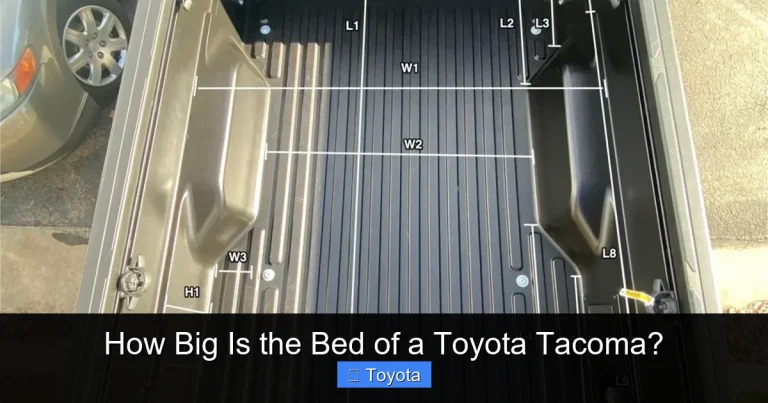
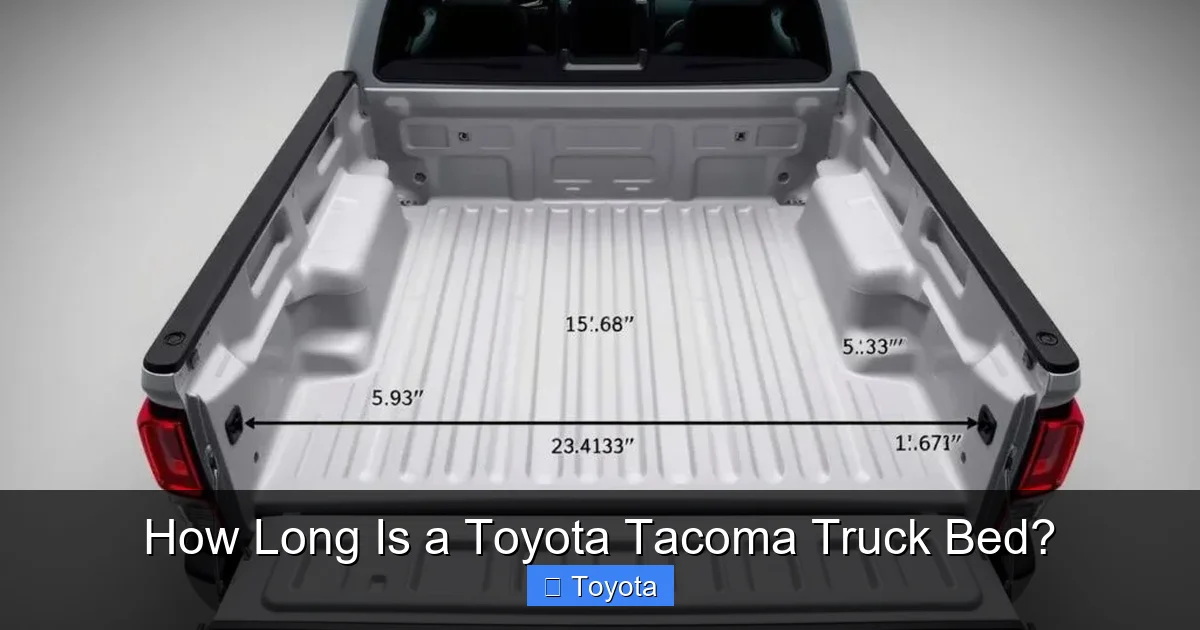
Before diving into the specific numbers for each model year, it helps to understand the naming convention Toyota uses. You will rarely see “5-foot bed” on a window sticker. Instead, you will see “Short Bed” and “Long Bed.” These are the two distinct cargo box sizes offered on the Tacoma since its inception in 1995. The short bed measures roughly 5 feet (60.5 inches) at the floor, while the long bed stretches to roughly 6 feet (73.7 inches) at the floor.
Short Bed vs. Long Bed: The Core Difference
The short bed is the volume seller. It is standard on the popular Double Cab configuration, which seats five passengers in four full-size doors. This combination gives you a comfortable back seat and a bed long enough for most lifestyle gear—coolers, camping totes, mountain bikes (with the tailgate down), and bags of mulch. The long bed is typically paired with the Access Cab (extended cab with rear-hinged half doors and jump seats). This setup prioritizes cargo capacity over rear passenger comfort. The extra 13 inches of floor length allows you to haul 8-foot lumber with the tailgate closed, a critical threshold for contractors and serious DIYers.
Bed Width and Depth: The Hidden Dimensions
Length gets the headlines, but width and depth dictate what actually fits. Across all generations, the Tacoma bed width between the wheel wells has remained remarkably consistent at approximately 41.5 inches. This is a magic number: it is just wide enough to slide a standard 4×8 sheet of plywood between the wheel arches if you angle it slightly, or carry two sheets stacked flat in a long bed. The overall bed width (outside the wheel wells) is roughly 56 to 57 inches depending on the generation. Bed depth (the height of the sidewall) is generally around 19 to 19.5 inches. This depth determines how much volume you have for loose gravel, snow, or gear stacked above the rail.
Tacoma Bed Dimensions by Generation
While the “short” and “long” labels have stayed the same, the exact interior measurements have shifted slightly as the truck grew larger, safer, and more refined over four generations. Here is the breakdown by era.
First Generation (1995–2004): The Compact Original
The original Tacoma replaced the Hilux nameplate in North America. It was a true compact truck. The short bed (Regular Cab and Access Cab) measured 60.3 inches at the floor. The long bed (Regular Cab only) measured 73.6 inches. The bed was narrower than later models, with a wheel-well width of roughly 40.5 inches. These trucks are light, simple, and the short bed Regular Cab is a unicorn for enthusiasts wanting a tiny footprint with a usable box. If you are looking at a used first-gen, remember that the composite bed material (on some trims) is dent-proof but can fade and crack over time.
Second Generation (2005–2015): The Growth Spurt
This is the generation where the Tacoma became a “midsize” truck in earnest. It grew significantly in every dimension. The short bed floor length standardized to 60.5 inches (5 ft 0.5 in). The long bed floor length became 73.7 inches (6 ft 1.7 in). The width between wheel wells expanded to the now-standard 41.5 inches. This generation introduced the composite inner bed with a steel outer shell as standard on most trims, along with the innovative deck rail system (tie-down cleats that slide in tracks). This is widely considered the sweet spot for used buyers: modern safety, proven reliability, and the classic hydraulic power steering feel.
Third Generation (2016–2023): Refinement and Technology
The third generation kept the bed dimensions nearly identical to the second gen: 60.5 inches for the short bed and 73.7 inches for the long bed. The big changes were structural. The frame was fully boxed for stiffness, and the bed gained standard LED lighting (on higher trims) and a 120V/400W outlet in the bed wall (TRD trims). The deck rail system returned. The tailgate gained a dampened assist for easy lowering. Crucially, the short bed Double Cab became the overwhelming volume leader, making long bed Access Cabs harder to find on dealer lots. If you are ordering a new truck during this era, you often had to specifically request the long bed configuration.
Fourth Generation (2024–Present): The All-New Platform
The 2024 Tacoma rides on the TNGA-F platform shared with the Tundra and Sequoia. While official spec sheets for every trim are still filtering out, early data indicates the bed lengths remain consistent: 60.5 inches for the short bed and 73.7 inches for the long bed. However, the bed width at the floor has increased slightly due to a wider track. The big news is the available integrated bed step in the rear bumper and a standard power tailgate lock on most grades. The composite bed liner is now standard across the lineup, and the deck rail system is more robust. If you are wondering how long it takes to order a Toyota Tacoma in this new generation, be aware that specific bed/cab/engine combos may have longer lead times.
How to Choose the Right Bed Length for Your Needs
Choosing between the 5-foot and 6-foot bed is not just about maximum cargo length. It changes the fundamental character of the vehicle. Here is how to decide based on your real life.
Hauling Capacity: The 8-Foot Sheet Test
The single biggest functional difference is the ability to carry standard building materials. A 4×8 sheet of plywood or drywall is 96 inches long. In a long bed (73.7 inches floor), the sheet rests on the wheel wells and the bulkhead, with the tailgate closed. It is secure and legal. In a short bed (60.5 inches), the sheet hangs over the tailgate by roughly 3 feet. You need a red flag, a bed extender, or you must drive with the tailgate down (which is illegal in some states if the load extends too far). If you build, remodel, or landscape regularly, the long bed saves you a trailer rental every time.
Garage Fit and Parking: The Daily Driver Reality
This is where the short bed shines. A Double Cab Short Bed Tacoma has an overall length of roughly 212 to 213 inches (about 17.7 feet). A standard residential garage is 20 feet deep. You fit with room to walk around the front bumper. An Access Cab Long Bed stretches to roughly 225 inches (18.75 feet). You still fit in a 20-foot garage, but you have only 15 inches of clearance at the rear. That makes parking stressful, and you cannot store bikes or tools on the back wall. If you park in a downtown garage, a tight driveway, or a standard parking space (often 18 feet), the short bed is significantly less anxiety-inducing.
Off-Road Considerations: Wheelbase and Departure Angle
The long bed adds roughly 13 inches to the wheelbase compared to the short bed on the same cab. A longer wheelbase improves stability on steep climbs and reduces the chance of high-centering on a crest. However, it hurts your departure angle. The rear overhang behind the rear axle is longer on the long bed, meaning the rear bumper or hitch is more likely to strike rocks on steep descents. For serious rock crawling, the short bed Double Cab (or even the rare short bed Access Cab on older gens) is geometrically superior. For high-speed desert running or overlanding with heavy gear, the long bed stability and cargo volume win.
Passenger vs. Cargo Priority
This is often the deciding factor for families. The Double Cab (four real doors) only comes with the short bed. The Access Cab (suicide doors, small rear jump seats) comes with the long bed. You cannot mix and match from the factory. If you have kids in car seats, you need the Double Cab. You get the short bed by default. If you drive solo or with one passenger 95% of the time, the Access Cab Long Bed gives you maximum utility. Note: The new 2024 Tacoma drops the Access Cab entirely in the US market, offering only the Double Cab (short bed) and the new XtraCab (a single-cab-with-storage configuration on a long bed frame). This simplifies the choice but removes the traditional extended-cab long-bed combo.
Popular Accessories for Tacoma Beds
Once you know your bed length, you can start kitting it out. The aftermarket support for the Tacoma is unmatched, but fitment is generation and length specific.
Bed Liners and Mats
Every Tacoma since 2005 has a composite bed that resists dents and rust, but it is slippery and scratches easily. A drop-in plastic liner (like a BedRug or DualLiner) protects the composite and adds grip. Spray-in liners (Line-X, Rhino) offer permanent protection and a textured surface but add weight and cost. For the DIY crowd, a heavy-duty rubber bed mat cut to your specific bed length (short or long) is the best value. It stays in place, protects the floor, and costs under $150. Measure twice before ordering; the wheel well cutouts differ between generations.
Tonneau Covers: Soft vs. Hard
A tonneau cover secures your gear and improves highway aerodynamics (slightly). Soft roll-up covers (TruXedo, Gator) are affordable, easy to remove, and work with the deck rail system. Hard folding covers (BAKFlip, Retrax) offer security and can support weight on top (rooftop tents, lumber), but they are heavy and expensive. Crucially, you must order the correct length: “5.5 ft” for the short bed and “6.5 ft” for the long bed. The rails mount to the bed sides, so the cover length must match the distance from bulkhead to tailgate exactly.
Bed Racks and Toolboxes
Overlanding has exploded the bed rack market. Systems from Prinsu, Front Runner, and Gobi mount to the deck rails or bed sides. They allow you to carry a rooftop tent, fuel cans, and recovery gear above the bed, leaving the floor free for coolers or tools. A crossover toolbox (mounted behind the cab) eats about 18 inches of bed length. On a short bed, that leaves only ~42 inches of floor space—tight for a toolbox AND a cooler. On a long bed, you still have ~55 inches left, which is very usable. If you want a toolbox and a tonneau cover, you need a “toolbox compatible” cover designed for that specific combination.
Maintenance Tips for Your Tacoma Truck Bed
A truck bed takes abuse. A little preventive care keeps it functional and preserves resale value.
Cleaning and Rust Prevention
Even with a composite bed, the steel tie-down loops, deck rail channels, and the tailgate hinges are bare metal from the factory. Spray them with a corrosion inhibitor (Fluid Film, WD-40 Specialist Corrosion Inhibitor) once a year, especially if you live in the Rust Belt or near salt water. Wash the bed out regularly. Sand, dirt, and fertilizer hold moisture against the composite and the metal hardware. A pressure washer on the bed floor and inside the tailgate structure goes a long way.
Checking for Damage
Inspect the bed rails (the top edge) for cracks. The composite can crack if overloaded or impacted sharply (like dropping a heavy engine block). Check the tailgate cables for fraying. If a cable snaps, the tailgate slams down and can bend the hinge brackets—a costly repair. Lubricate the tailgate latch mechanism with white lithium grease every oil change. If you have the deck rail system, remove the cleats occasionally and clean the channels; sand grit acts like grinding paste on the aluminum tracks.
Touch-Up Paint for the Steel Parts
The outer bedside panels are steel. Rock chips from tires or loading equipment will rust if ignored. Keep a bottle of Toyota touch-up paint (match your color code on the door jamb sticker) in your glovebox. Dab chips immediately. If you are considering a full respray for cosmetic reasons or rust repair, research the cost to paint a Toyota Tacoma beforehand; it is a significant investment that varies wildly by shop quality and region.
Real World Scenarios: Which Bed Fits Your Life?
Let’s look at three typical buyers to illustrate the decision matrix.
The Urban DIYer: Double Cab Short Bed
Sarah lives in a suburb, commutes 30 miles daily, and has two kids in booster seats. She hits Home Depot bi-weekly for 2x4s, bagged concrete, and plants. She parks in a standard garage. The Double Cab Short Bed is her only logical choice. The rear seats fit the kids safely. The short bed swallows 8-foot lumber with the tailgate down and a red flag for the short trip home. It fits the garage with the door closed. She adds a soft tonneau cover for grocery security and a bed mat for grip. Done.
The Solo Overlander: Access Cab Long Bed (Used 2nd or 3rd Gen)
Mike spends weekends on forest service roads. He carries a fridge, a rooftop tent, recovery boards, fuel, water, and tools. He drives alone 99% of the time. He buys a used 2016 Access Cab Long Bed TRD Off-Road. The long bed floor fits his fridge and dry box side-by-side with the tailgate closed. The bed rack holds the tent and fuel. The longer wheelbase smooths out washboard roads. He doesn’t care about rear seat access or garage fit—he parks in a driveway.
The Mobile Contractor: Double Cab Short Bed with Accessories
Javier runs a solo handyman business. He needs passenger capacity for occasional helpers but hauls tools, ladders, and materials daily. He gets a new Double Cab Short Bed. He installs a high-quality aluminum crossover toolbox (eating 18 inches) and a bed rack system above the rails for ladders and pipe. The remaining 42 inches of floor space holds a miter saw station or material bins. He accepts the short bed limitation because the crew cab is non-negotiable for his business image and versatility.
Conclusion
The Toyota Tacoma truck bed length question has a simple answer on the surface—5 feet or 6 feet—but the implications run deep. That 13-inch difference dictates your cab configuration, your garage compatibility, your off-road geometry, and your ability to haul standard building materials without a headache. For the vast majority of buyers, the Double Cab Short Bed is the sweet spot, balancing modern crew-cab comfort with sufficient cargo utility for lifestyle use. For the dedicated hauler, the off-grid overlander, or the tradesperson who refuses to tow a trailer for plywood, the Long Bed (found on Access Cab or XtraCab models) remains the superior tool.
Before you sign the paperwork, grab a tape measure. Measure your garage depth. Measure your longest recurring cargo. Measure your driveway turning radius. Then walk the dealer lot and sit in both configurations. Open the tailgate. Stand in the bed. The numbers on a spec sheet are useful, but the feeling of the space—and the reality of your daily parking situation—will make the final call for you. Whichever you choose, you are getting one of the most durable, versatile cargo boxes in the automotive world. Treat it right, and it will haul your adventures for decades.
Frequently Asked Questions
What are the exact interior dimensions of a Toyota Tacoma short bed?
The short bed measures approximately 60.5 inches long at the floor, 41.5 inches wide between the wheel wells, 56.7 inches wide at the floor, and 19.1 inches deep. These figures are consistent across the second, third, and fourth generations (2005–present).
Can I fit a 4×8 sheet of plywood in a Tacoma short bed with the tailgate closed?
No. A standard 4×8 sheet is 96 inches long. The short bed floor is only 60.5 inches. The sheet will rest on the wheel wells but will extend roughly 35 inches past the tailgate. You must drive with the tailgate down (secured) and a red flag, or use a bed extender.
Which Tacoma cab configuration comes with the long bed?
Historically, the Access Cab (extended cab with rear-hinged doors) comes standard with the 6-foot long bed. The Double Cab (four full doors) comes standard with the 5-foot short bed. For the 2024 model year, the Access Cab is replaced by the XtraCab, which also utilizes the long bed frame.
Does the long bed have a higher payload capacity than the short bed?
Not necessarily. Payload capacity is determined by the GVWR (Gross Vehicle Weight Rating) minus the curb weight. A long bed Access Cab 4×2 often has a higher payload than a short bed Double Cab 4×4 because it weighs less, but the bed length itself does not dictate the rating. Always check the yellow door jamb sticker on the specific vehicle.
Are tonneau covers interchangeable between short bed and long bed models?
Absolutely not. Tonneau covers are sized specifically for the bed length. A short bed cover (marketed as 5.5 ft) will not stretch to fit a long bed (6.5 ft), and a long bed cover will have excess material that cannot be secured on a short bed. You must buy the cover matching your exact bed length and generation.
How do I know if a used Tacoma has the long bed or short bed without measuring?
Look at the cab. If it has four full-size doors (Double Cab), it is a short bed. If it has smaller rear-hinged half doors (Access Cab) or is a Regular Cab (two doors only, older models), it is likely a long bed. Visually, the gap between the rear tire and the rear bumper is noticeably larger on a long bed.