
Is Toyota 3.4 an Interference Engine?
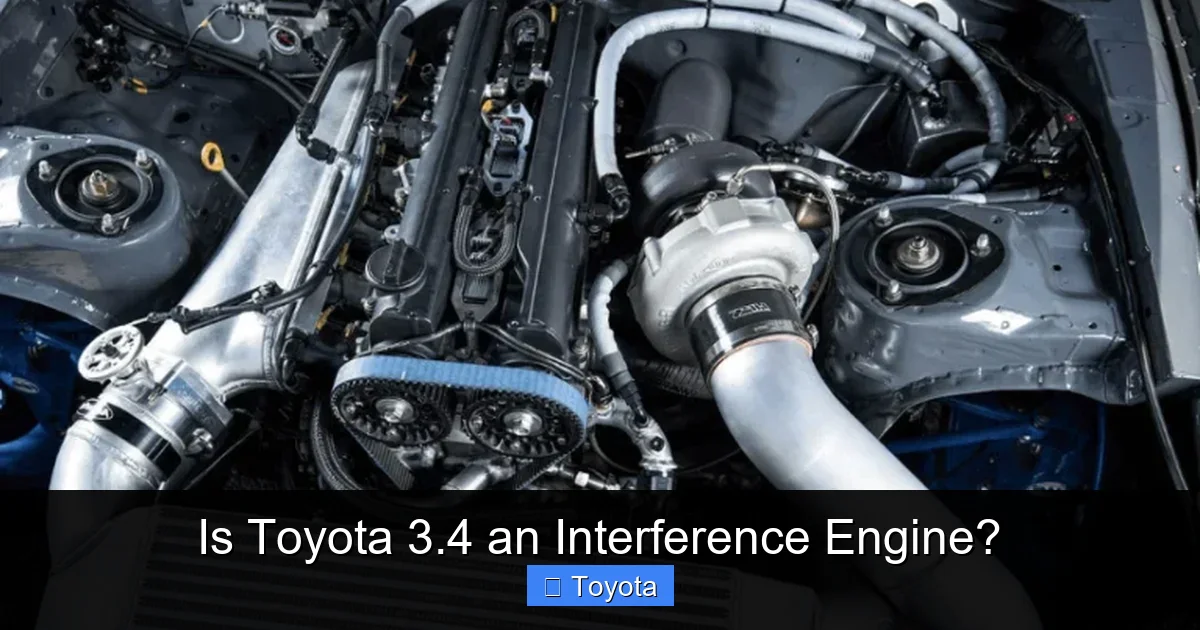
Short answer: The Toyota 3.4L V6 (5VZ-FE) is generally considered a non-interference engine, meaning a broken timing belt usually will not cause pistons to strike valves. However, you still need to replace the timing belt on schedule to avoid being stranded and prevent other expensive damage.
If you own a Toyota with a 3.4-liter V6, you have probably asked yourself one stressful question: Is the Toyota 3.4 an interference engine? It is a fair worry. When a timing belt fails, the difference between an interference and non-interference engine can mean the difference between a cheap tow and a brand-new engine.
Toyota built the 3.4L V6—known internally as the 5VZ-FE—for years, and it found its way into some of the brand’s most popular trucks and SUVs. People love this engine for its durability, but the timing belt question still keeps many owners up at night. In this article, we will break down exactly what interference means, whether the 3.4 fits the definition, and how to keep your engine running strong.
Think of this as a friendly chat over coffee. No mechanical jargon without an explanation, and no scare tactics. Just straight answers about the Toyota 3.4 and what you need to know to protect your investment.
Key Takeaways
- The Toyota 3.4 is non-interference: The 5VZ-FE 3.4L V6 is widely regarded as a non-interference engine, so a snapped timing belt typically will not bend valves or crack pistons.
- It uses a timing belt, not a chain: Unlike some newer Toyota engines, the 3.4 relies on a rubber timing belt that must be replaced at regular intervals.
- A broken belt still strands you: Even without valve damage, a snapped timing belt kills engine power instantly, requiring a tow and immediate repair.
- Replacement interval matters: Toyota generally recommended timing belt replacement every 60,000 to 90,000 miles depending on the model and conditions.
- Consider related parts: When replacing the belt, it is smart to also swap the water pump, tensioner, and idler pulleys while everything is accessible.
- Maintenance keeps it running past 200,000 miles: Regular oil changes, coolant checks, and belt service help the 3.4 deliver long-term reliability.
📑 Table of Contents
What Does “Interference Engine” Actually Mean?
Before we talk about the Toyota 3.4 specifically, let us define the term. An interference engine is one where the pistons and valves occupy the same space inside the cylinder at different times. The timing belt or chain keeps them perfectly synchronized so they never collide.
Interference vs. Non-Interference Engines
In a non-interference engine, there is enough clearance between the piston and the valves that even if the timing belt breaks, the pistons will not strike the valves. You will still lose power and coast to a stop, but the internal damage is usually limited.
In an interference engine, a broken timing belt can cause the piston to slam into an open valve. This often bends valves, cracks pistons, and can destroy the cylinder head. Repair bills can climb quickly, sometimes making an engine swap more economical than a fix.
Why the Timing Belt Is the Critical Piece
The timing belt is a rubber-reinforced belt that connects the crankshaft to the camshaft. It ensures the valves open and close at the exact millisecond the piston is in the right position. If that belt snaps or skips a tooth, the synchronization is gone. That is why manufacturers give strict replacement intervals.
Rubber wears out. It cracks, glazes, and eventually snaps. On an interference engine, that snap can be catastrophic. On a non-interference engine like the Toyota 3.4, it is still an emergency, but not necessarily an engine-killer.
Meet the Toyota 3.4L (5VZ-FE) Engine
The Toyota 3.4L V6 debuted in the mid-1990s and earned a reputation as a solid, no-nonsense powerplant. It is an iron-block, aluminum-head engine with dual overhead camshafts. It was not built for racing, but it was built to last.
Which Toyotas Came with the 3.4?
You will find the 3.4L under the hood of several Toyota models, including the 4Runner, Tacoma, T100, and early Tundra. If you drive a 4Runner from that era, you might already know how capable it is off-road. If you want to learn more about using that capability, check out our guide on how to put a Toyota 4Runner in 4-wheel drive.
Because it was used in trucks and SUVs, the 3.4 often towed trailers, climbed hills, and carried heavy loads. That workhorse duty makes proper maintenance even more important. An engine that spends its life hauling weight needs clean oil, fresh coolant, and a healthy timing belt.
Timing Belt or Timing Chain?
The Toyota 3.4 uses a timing belt, not a timing chain. This is a key detail. Timing belts need periodic replacement, while chains are often designed to last the life of the engine. Some newer Toyota engines switched to chains, and if you are curious about that change, our article on what year Toyota Tundra has a timing chain explains the shift.
Knowing your engine has a belt means you have a maintenance deadline. Ignore it, and you are gambling with your mobility. Respect it, and the 3.4 will reward you with years of steady service.
Is the Toyota 3.4 an Interference Engine?
Here is the answer you came for. The Toyota 3.4L 5VZ-FE is widely regarded as a non-interference engine.
The Direct Answer
Most mechanics, service manuals, and Toyota enthusiast communities agree: if the timing belt breaks on a 3.4, the pistons should not hit the valves. You will still be stranded on the side of the road, but you likely will not face catastrophic internal engine damage from valve-to-piston contact.
This is good news for owners of older Toyota trucks and SUVs. It means that if your belt snaps at 70,000 miles, you are looking at a tow and a belt replacement rather than a full engine teardown.
What Happens If the Timing Belt Snaps?
Even though it is non-interference, a snapped timing belt is not harmless. The engine will stop immediately. You will lose power steering and power braking assist, which can be dangerous if you are driving at speed. You will need a tow. Once the belt is replaced, the engine should run again, assuming no other damage occurred from the sudden shutdown.
It is also worth noting that a worn belt can skip a tooth without snapping completely. That can throw off timing enough to cause rough idling, poor performance, or a check engine light. If you are seeing warning lights, you might want to read our piece on why your Toyota Camry check engine light is on for general diagnostic context, even if you drive a different model.
Are There Any Exceptions by Model Year?
Toyota kept the 5VZ-FE design consistent across most of its production run. There are no widely documented model-year changes that turned the 3.4 into an interference engine. Still, if you have a heavily modified engine or one with unknown history, it is smart to verify compression and valve clearance before assuming anything.
If you are buying a used 3.4 and the seller cannot prove the belt was changed, treat the engine as if it is due for service immediately. It is better to spend a few hundred dollars now than to find out the hard way later.
Toyota 3.4 Timing Belt Maintenance Guide
Since the 3.4 is non-interference, you do not need to panic if your belt is slightly overdue. However, you should never ignore the replacement interval. Prevention is always cheaper than a tow truck and a new belt installation.
Recommended Replacement Interval
Toyota generally recommended replacing the 3.4 timing belt every 60,000 to 90,000 miles, depending on the model year and driving conditions. Severe conditions—like extreme heat, dust, or frequent towing—can shorten that interval. If you bought a used Toyota with the 3.4 and do not know when the belt was last changed, assume it is due soon.
Many owners also replace the water pump, tensioner, and idler pulleys at the same time. Since the mechanic has to remove the timing belt cover to access the belt, it makes financial sense to swap those parts while everything is apart. Doing it all at once saves labor costs down the road.
Warning Signs of a Worn Timing Belt
Timing belts do not always give dramatic warnings before they fail, but there are clues:
- Ticking noise from the engine: A worn belt can make a rhythmic ticking sound as it travels around the pulleys.
- Engine misfires: If the belt slips, timing goes off and cylinders may misfire, especially under load.
- Oil leaking from the front of the engine: A failing seal near the belt cover can drip oil onto the belt and accelerate rubber wear.
- Hard starting or no start: If the belt has already snapped, the engine will crank but not start.
If you notice any of these signs, do not wait. Have a mechanic inspect the belt and related components right away.
Should You DIY or Call a Mechanic?
Replacing a timing belt on a Toyota 3.4 is doable for a skilled home mechanic, but it is not a beginner job. You need to align timing marks precisely. If you install the belt one tooth off, the engine will run poorly or not at all. Unless you have the right tools, a service manual, and plenty of patience, it is usually worth paying a professional.
A professional shop will also pressure-test the cooling system and check for oil leaks while the front of the engine is exposed. That extra inspection can catch small problems before they become big ones.
Other Common 3.4L Engine Concerns
The Toyota 3.4 is tough, but no engine is immortal. Here are a few other issues that pop up on high-mileage examples.
Head Gasket and Cooling System Issues
Overheating is the enemy of any engine. On the 3.4, a neglected cooling system can lead to head gasket failure. Make sure your coolant is fresh and at the right level. If you are not sure how to check it, our guide on how to check coolant level in a Toyota Camry walks through the basics that apply to many Toyotas.
If the engine runs hot, stop driving and let it cool. Continuing to drive an overheating 3.4 can warp the aluminum heads, which is a much costlier repair than a timing belt. Keep an eye on the temperature gauge, especially when towing or driving in summer heat.
Oil Leaks and Consumption
Older 3.4 engines sometimes develop oil leaks around the valve covers, rear main seal, or oil pan. Check your driveway for spots and top off the oil as needed. Running low on oil will wear out bearings and timing components faster.
Some high-mileage 3.4 engines also consume a little oil between changes. That is not always a sign of failure, but you should monitor the dipstick and add oil if the level drops. Never let the engine run low.
Keeping the Engine Healthy Long-Term
Simple habits go a long way:
- Change the oil every 5,000 miles or as recommended in your owner’s manual.
- Replace the timing belt on schedule, along with the water pump and tensioner.
- Flush the coolant at proper intervals to prevent corrosion and overheating.
- Listen for unusual noises and address them early.
- Keep the air filter clean so the engine breathes easily.
Final Verdict: Should You Worry About the 3.4?
If you are losing sleep over whether your Toyota 3.4 is an interference engine, you can rest easier. It is not. A broken timing belt will leave you stranded, but it should not destroy your engine internals.
Buying a Used Toyota with the 3.4L
When shopping for a used 4Runner, Tacoma, or Tundra with the 3.4, ask the seller for timing belt records. If there is no proof it was changed recently, budget for a timing belt service immediately after purchase. A well-maintained 3.4 can easily run past 200,000 miles.
Also ask about coolant and oil changes. An engine with regular fluid service is almost always a better buy than one with a spotty history, even if the mileage is lower.
Simple Maintenance Checklist
- Verify timing belt replacement history before buying.
- Check coolant level monthly and top off as needed.
- Change oil regularly and use the correct viscosity.
- Inspect belts and hoses for cracks at every oil change.
- Address check engine lights promptly instead of ignoring them.
The Toyota 3.4 is a dependable engine, and knowing it is non-interference removes one major worry from your ownership experience. Stick to the maintenance schedule, listen to your engine, and this V6 will likely serve you well for many more miles.
Frequently Asked Questions
Is the Toyota 3.4 an interference engine?
No, the Toyota 3.4L 5VZ-FE is generally considered a non-interference engine. If the timing belt breaks, the pistons typically will not strike the valves.
What happens if the timing belt breaks on a Toyota 3.4?
The engine will stop running immediately and you will need a tow. Because it is non-interference, you usually avoid major internal damage, but you still need a new belt and possibly other parts.
How often should I replace the timing belt on a Toyota 3.4?
Toyota generally recommended replacement every 60,000 to 90,000 miles depending on the model year and driving conditions. Check your owner’s manual for the exact interval.
Which Toyota vehicles used the 3.4L engine?
The 3.4L V6 was used in the Toyota 4Runner, Tacoma, T100, and early Tundra models. It was a popular choice for trucks and SUVs in the 1990s and early 2000s.
Should I replace the water pump when doing the timing belt?
Yes, it is a good idea to replace the water pump, tensioner, and idler pulleys at the same time. Since the mechanic is already accessing the timing belt area, doing it all together saves labor costs later.
Can I drive my Toyota 3.4 if the timing belt is overdue?
You can drive it, but it is risky. An overdue belt can snap without warning, leaving you stranded. It is best to replace it as soon as possible rather than gambling with a breakdown.


