How Long Do Toyota Tpms Sensors Last?
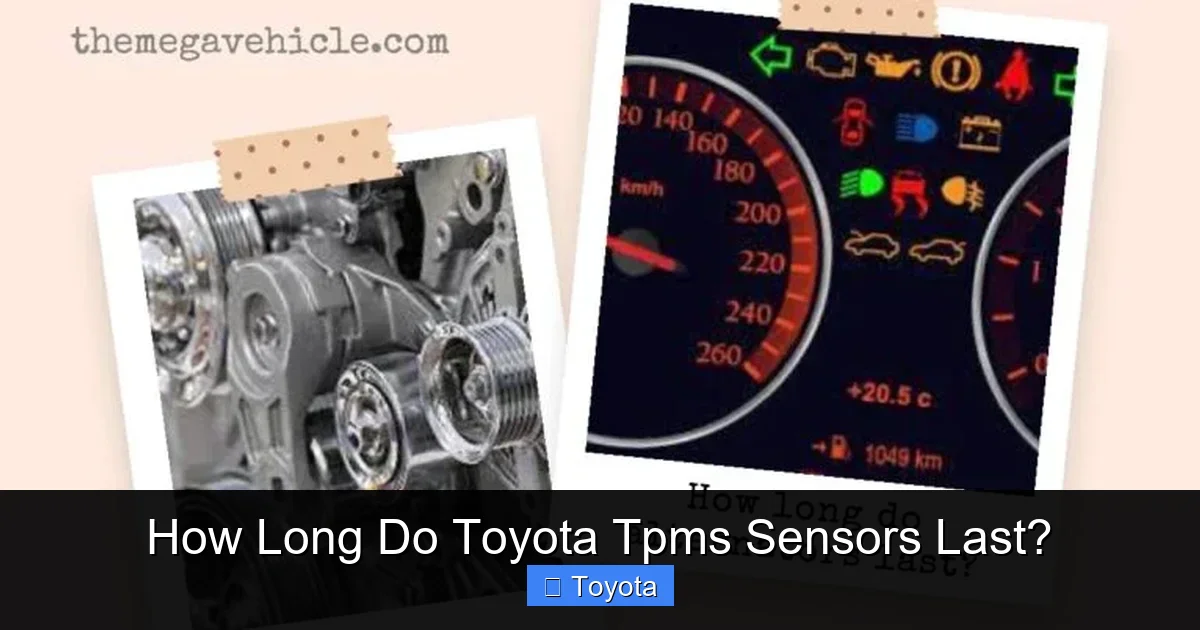
Most Toyota TPMS sensors last 7 to 10 years, and the limit is almost always the sealed battery inside the sensor rather than the sensor itself. Heat, road salt, potholes, and skipped tire rotations can shorten that life to as little as five years. When the light flashes for a minute at startup and then stays on, that is your cue to plan for replacement.
Your tire pressure light blinks on during the morning commute. You pull over, check all four tires, and everything looks fine. So why is the car complaining? In most cases, the answer is hiding inside the wheel. It is a small battery-powered device called a TPMS sensor.
Toyota TPMS sensors are tough little parts. They spin with the wheel, face heat, cold, road salt, and potholes, and still manage to radio your tire pressure to the dashboard every few seconds. But they do not last forever. Like any battery-operated part, they have a shelf life.
So how long do Toyota TPMS sensors last? This guide breaks down the average lifespan, what shortens it, the warning signs to watch for, and what replacement really costs. By the end, you will know when to plan for new sensors and how to squeeze extra years out of the ones you have.
Key Takeaways
- Average lifespan: Toyota TPMS sensors typically last 7 to 10 years, with some reaching 12 years in mild climates.
- The battery is the limit: The lithium battery is sealed inside the sensor and cannot be swapped out, so the whole unit gets replaced.
- Heat and salt kill sensors early: Hot climates, road salt, and corrosion can cut lifespan down to five or six years.
- Flashing light means failure: A TPMS light that blinks for about 60 seconds at startup and then stays solid points to a dead sensor, not low tire pressure.
- Replace in sets: When one sensor dies, the others are usually close behind, so replacing all four saves you repeat trips to the shop.
- Cost is modest: Expect roughly $60 to $120 per sensor installed, or $250 to $450 for a full set depending on your Toyota model.
- Maintenance helps: Regular tire pressure checks, proper rotations, and clean valve stems can add a year or two to sensor life.
📑 Table of Contents
The Short Answer: How Long Do Toyota TPMS Sensors Last?
Most Toyota TPMS sensors last between 7 and 10 years. Some make it to 12. A few die at year five. The range comes down to the battery sealed inside the sensor, and that battery cannot be replaced on its own.
It Is a Battery Problem, Not a Sensor Problem
Each sensor has a small lithium battery that powers a pressure chip and a radio transmitter. The battery runs every time the wheel turns. That means it drains slowly but constantly, whether you drive one mile a day or one hundred.
Once the battery fades, the sensor goes quiet. Your car stops hearing from that wheel, and the dashboard light comes on. There is no serviceable door, no coin cell to swap. The whole sensor gets replaced.
Mileage Matters Less Than You Think
Many drivers assume high mileage kills TPMS sensors. It plays a role, but time matters more. A 2014 Camry with 40,000 miles on it is just as likely to need sensors as a 2014 Camry with 140,000 miles. The clock and the climate do most of the damage.
That is why a low-mileage older Toyota often needs sensors before a newer high-mileage one. If your car is past the seven-year mark, start budgeting for replacement even if the light is still off.
What Actually Shortens Toyota TPMS Sensor Life
Not every sensor ages the same way. A few factors can push a 10-year sensor down to a 5-year sensor. Here are the big ones.
Heat and Sun Exposure
Heat is the number one enemy of any battery. A wheel sitting in Arizona or Florida sun can hit 150 degrees Fahrenheit or more. That heat speeds up the chemical reaction inside the battery and shortens its life. Cars parked in garages and driven in mild climates tend to get the full 10 years.
Road Salt and Corrosion
The sensor sits at the base of the valve stem, right where salt spray and road grime collect. Over several winters, corrosion can eat into the stem and the sensor housing. In snowy states, TPMS sensors often fail from corrosion before the battery gives out.
Physical Damage
Potholes, curbs, and debris take a toll. A hard hit can crack the sensor body or damage the valve stem. Tire shop mistakes count too. A careless mount or a stem that gets bent during a tire change can end a sensor’s life early.
Cheap Replacement Stems
When you buy tires, shops often ask if you want new valve stems. Cheap rubber or generic stems can leak or corrode faster than the original Toyota part. Spending a little more on quality stems protects the sensor underneath.
Infrequent Driving
Sensors go into a low-power sleep mode when the car sits still. That is good for battery life. But cars that sit for months at a time can develop dead batteries in the sensors anyway, and long idle periods let corrosion set in. Regular driving is actually healthier for TPMS sensors.
Signs Your Toyota TPMS Sensors Are Failing
Your car will usually tell you when a sensor is on its way out. You just have to know what to look for.
The Light That Will Not Quit
A solid TPMS light usually means low tire pressure. Add air, drive a few minutes, and it should reset. If the light stays on after you have set all four tires to the correct pressure, the sensor is the likely culprit.
Flashing Then Solid
This is the classic dead-sensor signal. The light blinks for about 60 seconds when you start the car, then stays solid. That pattern means the system cannot communicate with one or more sensors. It is a communication fault, not a pressure fault.
Erratic or Missing Readings
Some Toyotas show individual tire pressures on the dash or in the Toyota app. If one corner reads blank, jumps around, or shows a number that makes no sense, that sensor is fading. Intermittent readings often show up months before total failure.
If you are not sure which corner is the problem, this guide on how to tell which TPMS sensor is bad on a Toyota walks through the quick checks step by step.
A Slow Leak That Will Not Go Away
Sometimes the sensor is fine but the valve stem seal is leaking. You top off the tire, and a week later it is low again. A tire shop can test the stem with soapy water in about a minute. Fix the leak before you blame the sensor.
Lifespan by Toyota Model
Toyota uses similar sensor technology across its lineup, so the lifespan numbers stay fairly consistent. Here is what owners typically report.
- Camry and Corolla: 7 to 10 years. These are the most common models for sensor replacement simply because there are so many on the road.
- RAV4 and Highlander: 7 to 10 years. SUVs see more potholes and curb hits, so physical damage shows up more often.
- Tacoma and Tundra: 6 to 9 years. Trucks that tow, haul, or spend time on gravel roads tend to lose sensors a bit sooner.
- Prius: 8 to 11 years. Lighter wheels and gentler driving help sensors last longer.
- 4Runner and Land Cruiser: 7 to 10 years, but off-road use raises the risk of impact damage.
One pattern holds across every model. Sensors from the same build date tend to fail within a year of each other. If one goes at year eight, the other three are usually not far behind.
How to Make Your Toyota TPMS Sensors Last Longer
You cannot swap the battery, but you can protect the sensor. A few simple habits add real years to the part.
Check Pressure Monthly
Underinflated tires flex more, build more heat, and work the sensor harder. A quick monthly check with a good gauge keeps everything in range. If your Toyota is connected, you can also learn how to check tire pressure on the Toyota app without leaving the driveway.
Do Not Skip Tire Rotations
Rotations spread wear evenly and give a technician a chance to inspect each sensor and stem. Skipping them means problems hide longer and get worse.
Keep Valve Stems Clean
A quick rinse of the wheels during winter washes off the salt that drives corrosion. It sounds minor, but it makes a real difference in snowy states.
Use Quality Replacement Parts
When you do need new sensors, go with OEM or a well-known brand that matches Toyota’s frequency. Cheap universal sensors often fail early or refuse to pair with the car.
Fix Leaks Right Away
A leaking stem lets moisture in. Moisture plus metal equals corrosion, and corrosion kills sensors. Small leaks are cheap to fix and expensive to ignore.
Replacement Cost and What to Expect
Replacing TPMS sensors is not a major expense, but the price varies by model and shop.
Parts and Labor
Expect roughly $60 to $120 per sensor installed at an independent shop. Dealerships often land at the higher end. A full set of four typically runs $250 to $450, including the relearn procedure.
The Relearn Step
New sensors must be paired with the car so the computer knows which signal belongs to which wheel. Shops do this with a scan tool in a few minutes. Some Toyotas can be relearned with a simple drive cycle, and you can read about that in this guide on how to activate a new Toyota TPMS sensor without a tool.
Should You Buy a Protection Plan?
Tire and wheel protection plans sometimes cover TPMS sensors, especially when damage comes from a road hazard. It is worth checking what your plan includes before you pay out of pocket. This breakdown of how much Toyota tire and wheel protection costs helps you decide if the coverage makes sense for your driving.
Replace All Four at Once
It costs more upfront, but it saves you three return trips over the next two years. Since sensors from the same batch age together, a full set replacement is usually the smarter move once one fails past year seven.
The Bottom Line
Toyota TPMS sensors generally last 7 to 10 years, and the sealed battery inside is what ends their life. Heat, road salt, potholes, and rough tire service can cut that down to five or six years, while mild climates and good maintenance can stretch it past a decade.
Watch for the flashing-then-solid light, blank or jumpy readings, and slow leaks that keep coming back. When one sensor dies on an older Toyota, plan on replacing all four and having them relearned. It is a modest cost that keeps your tire pressure system, and your safety, working the way it should.
Frequently Asked Questions
How long do Toyota TPMS sensors last on average?
Most Toyota TPMS sensors last 7 to 10 years. Some reach 12 years in mild climates, while hot climates and heavy road salt use can shorten life to five or six years. The sealed battery inside the sensor is the limiting factor.
Can I replace just one TPMS sensor?
Yes, you can replace a single sensor. However, sensors installed at the factory tend to fail within about a year of each other. If your Toyota is past year seven, replacing all four at once usually saves money and repeat shop visits.
Why does my TPMS light flash and then stay on?
A light that blinks for about 60 seconds at startup and then stays solid means the system cannot communicate with one or more sensors. That points to a dead sensor battery or a failed sensor, not low tire pressure.
Can I drive with a bad TPMS sensor?
Yes, your car is safe to drive. The system just cannot warn you about low pressure on that wheel. Check your tires with a gauge regularly until you get the sensor replaced, since you lose that automatic safety alert.
Do cold temperatures damage TPMS sensors?
Cold weather does not damage the sensor itself, but it lowers tire pressure and can trigger the light. The bigger cold-weather risk is road salt, which corrodes valve stems and sensor housings over several winters.
How much does it cost to replace Toyota TPMS sensors?
Expect about $60 to $120 per sensor installed, or $250 to $450 for a full set of four including the relearn procedure. Dealership pricing tends to sit at the higher end of that range.