How to Fix Ac in a Toyota Tacoma
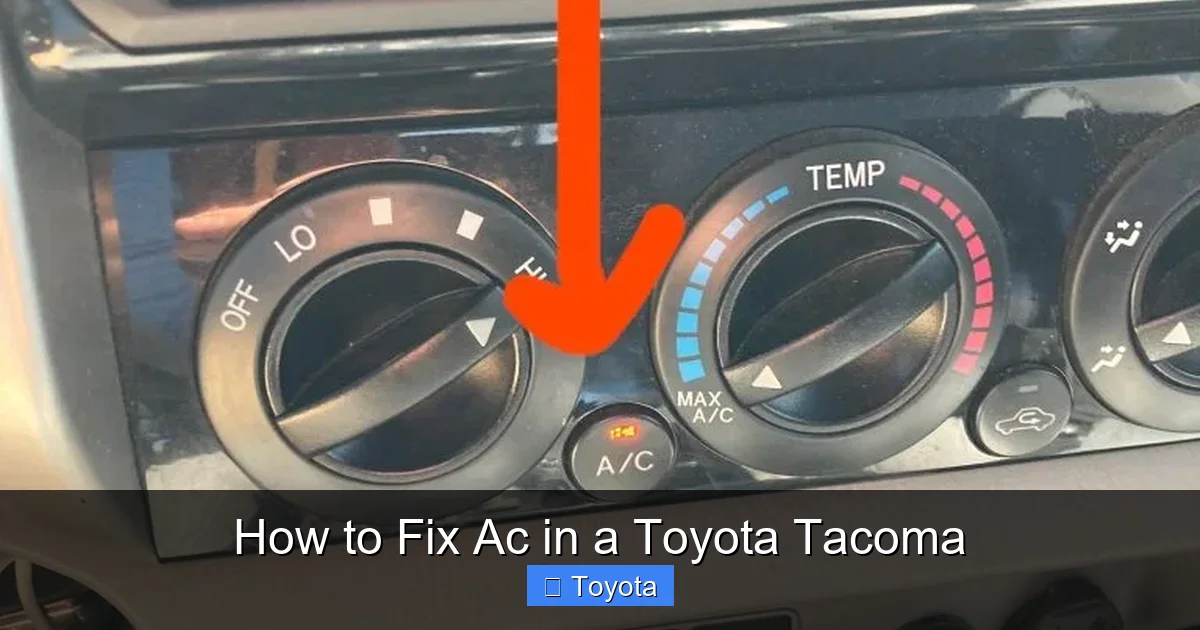
Is your Toyota Tacoma blowing hot air instead of cold? This guide shows you how to fix AC in a Toyota Tacoma using simple tools and clear steps. From changing the cabin filter to recharging refrigerant, you will learn how to restore cool air and when to seek professional help.
Key Takeaways
- Start with the basics: Check the cabin air filter and AC settings before assuming a major repair.
- Low refrigerant is common: Recharging the system often fixes warm air issues in a Toyota Tacoma.
- A flashing AC light signals trouble: It usually points to a compressor or sensor problem that needs diagnosis.
- Some jobs need a pro: Compressor replacement and major leaks require professional tools and certification.
- Prevention saves money: Running your AC year-round keeps seals lubricated and prevents costly failures.
📑 Table of Contents
Introduction
It happens to every Toyota Tacoma owner at some point. You climb into your truck on a hot summer afternoon, crank the AC to max, and wait for that blast of cold air. Instead, you get warm, stale air blowing through the vents. It is frustrating, especially when you are stuck in traffic or heading out for a weekend adventure.
The good news is that you do not always need a mechanic to fix AC in a Toyota Tacoma. Many common problems are simple enough to handle in your own driveway. A clogged cabin filter, low refrigerant, or a dirty condenser can all make your AC feel broken when the fix is actually quick and affordable.
In this guide, we will walk through how to fix AC in a Toyota Tacoma step by step. You will learn how to diagnose the issue, perform easy DIY repairs, and recognize when it is time to call a professional. Let us get your Tacoma blowing cold again.
Understanding Your Toyota Tacoma’s AC System
How the AC System Works
Your Toyota Tacoma’s air conditioning system works on a simple principle. It moves heat from inside the cabin to the outside using a chemical called refrigerant. The compressor pressurizes the refrigerant. The condenser releases heat. The evaporator absorbs heat from the air passing through your dashboard. When any part of this chain fails, you lose cold air.
Most Tacomas use either R-134a or R-1234yf refrigerant, depending on the model year. Newer trucks tend to use the newer R-1234yf. You should check your owner’s manual or the sticker under the hood before buying any recharge kit.
Common Signs Your Tacoma AC Needs Repair
Knowing the symptoms helps you fix AC in a Toyota Tacoma faster. Here are the most common warning signs:
- Air feels warm or only mildly cool
- Weak airflow from the vents
- Strange smells when the AC turns on
- Rattling or grinding noises from the compressor
- AC light flashing on the dashboard
If you notice any of these, it is time to start troubleshooting.
Diagnosing the Problem
Check the AC Light and Dashboard Indicators
One of the first things to look at is the AC button light. If the light flashes when you press it, your Tacoma’s computer has detected a fault. This often means the compressor clutch is not engaging, or a pressure sensor is reading incorrectly.
A flashing AC light does not always mean a costly repair. Sometimes it is just a low refrigerant level or a loose electrical connection. However, if the light keeps flashing after a recharge, you may need deeper diagnostics.
If you want to dig deeper into this specific issue, you can read our guide on how to fix AC light flashing on a Toyota Tacoma for more targeted steps.
Inspect the Cabin Air Filter
A dirty cabin air filter is one of the most overlooked causes of weak AC performance. The filter sits behind the glove box and catches dust, pollen, and debris. Over time, it gets clogged. When that happens, airflow drops, and the air coming out of your vents feels weak even if the system is cold.
You should replace the cabin filter every 15,000 to 20,000 miles. If you drive on dusty roads often, change it more frequently.
Look for Refrigerant Leaks
Refrigerant does not get used up like gasoline. If your system is low, you likely have a leak. Look for oily residue around AC hose connections, the compressor, or the condenser. You might also hear a faint hissing sound when the engine is off.
Small leaks can be hard to spot. Mechanics often use UV dye and a blacklight to find them. If you see a leak, do not just add refrigerant and ignore it. The system will lose charge again, and you will be back to square one.
Simple Fixes You Can Do at Home
Replacing the Cabin Air Filter
Changing the cabin air filter is the easiest way to fix AC in a Toyota Tacoma when airflow feels weak. Here is how to do it:
- Open the glove box and remove any items inside.
- Release the glove box stops so it can drop down.
- Locate the filter cover and unclip it.
- Slide out the old filter and note the airflow direction.
- Slide in the new filter with the arrows pointing the right way.
- Reassemble the glove box.
This job takes about 15 minutes and costs less than twenty dollars for a quality filter.
Recharging the AC System
If your Tacoma’s AC is blowing warm air, low refrigerant is a likely culprit. You can recharge the system yourself with a kit from an auto parts store. Make sure you buy the correct type for your truck.
First, locate the low-pressure service port. It is usually near the firewall on the passenger side. Attach the recharge hose, start the engine, and turn the AC to max cold. Add refrigerant slowly while watching the pressure gauge. Do not overfill the system, as too much pressure can damage components.
The basic steps for adding refrigerant are similar across many vehicles. If you want a visual walkthrough of the process, check out our guide on how to put Freon in a 2009 Toyota Camry.
After recharging, wait a few minutes and feel the vents. If the air gets cold, you are good to go. If it stays warm, there may be a leak or a component failure.
Cleaning the AC Condenser
The condenser sits in front of the radiator, where it catches bugs, leaves, and road debris. When it gets clogged, it cannot release heat properly. That makes your AC work harder and blow warmer air.
To clean it, you will need to pop the hood on a Toyota Tacoma so you can reach the front of the engine bay. Wait until the engine is cool, then gently spray the condenser with a garden hose. Use low pressure so you do not bend the delicate fins. You can also use a foaming coil cleaner made for AC condensers.
A clean condenser helps your Tacoma’s AC run efficiently and can prevent compressor strain.
Electrical and Component Issues
AC Compressor Clutch Problems
The compressor is the heart of your AC system. It has a clutch that engages and disengages to pump refrigerant. If the clutch fails, the compressor will not run, and you will get warm air.
You can sometimes hear the clutch click when you turn on the AC. If there is no click and the air stays warm, the clutch coil, fuse, or relay could be bad. Replacing a clutch is possible for experienced DIYers, but many people choose to replace the whole compressor instead.
Blend Door Actuator Failures
Sometimes the AC is cold, but the air coming out is hot. This often points to a blend door actuator. This small motor moves a plastic door inside the dashboard to mix hot and cold air. When the actuator breaks, the door can get stuck on the heat side.
You might hear a clicking sound behind the dash when you change the temperature. Fixing this usually means removing part of the dashboard, so it is often a job for a professional.
Blower Motor and Resistor Issues
If no air comes out of the vents at all, the blower motor could be dead. If air only blows on the highest setting, the blower resistor is likely the problem. Both parts are relatively affordable, but accessing them can be tricky depending on your Tacoma’s model year.
Start by checking the fuses. A blown AC fuse is an easy fix that many people overlook.
When to Call a Professional Mechanic
Major Refrigerant Leaks
You can recharge your AC at home, but you cannot fix a major leak without professional equipment. Refrigerant is harmful to the environment, and it is illegal to vent it into the atmosphere. A shop can recover the old refrigerant, find the leak, repair it, and recharge the system properly.
Compressor Replacement
Replacing an AC compressor is a heavy job. It involves removing belts, disconnecting lines, and often evacuating the system. If the compressor has failed internally, metal shavings can spread through the lines. A professional will flush the system and replace the receiver-drier or accumulator to protect the new compressor.
Electrical Wiring Problems
Modern Tacomas use complex computer controls for the AC system. If you have traced the issue to a wiring short, a faulty control module, or a sensor problem, it is best to let a technician handle it. Electrical gremlins can be time-consuming to diagnose without the right scan tools.
Preventive Maintenance Tips
Run Your AC Regularly
Even in the winter, run your Tacoma’s AC for about ten minutes once a week. This keeps the compressor seals lubricated and prevents them from drying out. It also helps keep the system free of moisture buildup.
Schedule Seasonal Inspections
Before summer arrives, give your AC a quick check. Replace the cabin filter, inspect the condenser for debris, and make sure the air feels cold. Catching a small issue early can save you from a big repair bill in July.
Conclusion
You do not have to suffer through a hot drive just because your Toyota Tacoma’s AC is acting up. As you have seen, many common problems are simple enough to fix at home. Start with the easiest steps, like changing the cabin air filter and cleaning the condenser. If the air is still warm, try recharging the refrigerant.
When the problem goes beyond a recharge or a filter, know your limits. A flashing AC light, a dead compressor, or a blend door issue might require professional tools and expertise. There is no shame in taking your truck to a shop when the job gets too big.
By staying on top of basic maintenance, you can keep your Tacoma’s AC blowing cold for years to come. Stay cool out there.
Frequently Asked Questions
Why is my Toyota Tacoma blowing hot air from the AC?
Hot air usually means low refrigerant, a clogged cabin filter, or a compressor that is not engaging. Start by checking the filter and recharging the system if needed.
How often should I recharge my Toyota Tacoma AC?
You should not need to recharge often unless there is a leak. If the system is low, find and fix the leak before adding more refrigerant.
Where is the cabin air filter in a Toyota Tacoma?
The cabin air filter is located behind the glove box on most Tacoma models. You can reach it by lowering the glove box and unclipping the cover.
Can I drive with a broken AC compressor?
Yes, you can drive with a broken compressor, but you will not have cold air. If the compressor clutch is seized, it could also damage the serpentine belt.
What does a flashing AC light mean on a Tacoma?
A flashing AC light usually means the computer detected a fault in the system. It often relates to the compressor clutch, pressure sensor, or refrigerant level.
How much does it cost to fix AC in a Toyota Tacoma?
A simple recharge might cost under one hundred dollars DIY, while a compressor replacement at a shop can run several hundred dollars. Costs depend on the exact problem.